
Starting a fitness journey can feel overwhelming, can’t it? You scroll through Instagram, see shredded pros lifting impossible weights, and think, “That’s not me.” I’ve been there—standing in my tiny apartment, no dumbbells, no clue, just a desire to feel stronger. Good news: the ultimate no-equipment workout for beginners exists, and it’s simpler than you imagine. No gym, no gear, just your body and a bit of floor space. Let’s break it down together.
This guide isn’t about perfection. It’s about progress. We’ll cover warm-ups, full-body circuits, form tips, and scaling options so you finish your first session proud, not puzzled. If you’re ready to ditch excuses and build confidence from day one, keep reading.
Why No-Equipment Workouts Are Perfect for Beginners
Let’s face it: gyms intimidate. The clanging plates, the mirrors, the unspoken “rules.” A no-equipment workout removes all that noise. You control the pace, the space, the playlist. In my early days, home sessions saved me from quitting before I started.
Bodyweight training builds a foundation—strength, balance, mobility—without risking injury from heavy loads. Research shows beginners gain muscle and torch fat just as effectively with calisthenics as with weights, especially in the first months. Plus, it’s free. Your living room becomes your personal studio.
Emotionally? It’s empowering. Completing push-ups on your knees today leads to full ones tomorrow. That’s real growth you can feel.
Setting Up Your Beginner-Friendly Space
You don’t need much. Clear a 6×6 foot area—push the coffee table aside, roll out a towel if the floor’s hard. Wear comfy clothes that let you move. Sneakers optional; barefoot builds foot strength.
Pro tip: open a window. Fresh air keeps you alert. I workout near my balcony door; the breeze makes burpees slightly less evil.
- Water bottle nearby—hydration isn’t optional.
- Phone timer for intervals.
- Mirror or phone camera to check form.
That’s it. No excuses about “not having the right setup.”
Warming Up: The Step Most Beginners Skip (Don’t)
Cold muscles are cranky muscles. Five minutes of dynamic movement preps joints and prevents tweaks. I learned this after pulling my shoulder doing push-ups straight out of bed—ouch.
Quick 5-Minute Warm-Up Circuit
Do each for 45 seconds, flow from one to the next:
- Jumping jacks (or step-outs if jumping feels much)
- Arm circles (forward then back)
- Bodyweight good mornings (hinge at hips, bow forward)
- High knees in place
- Inchworm to plank (walk hands out, walk back)
You’ll feel warmer, looser, ready. No static stretching yet—save that for cool-down.
The Ultimate No-Equipment Workout Circuit
Here’s the heart of it: a 20-minute full-body routine you can do 3-4 times weekly. We’ll use a simple structure—40 seconds work, 20 seconds rest, 3 rounds. Rest 1 minute between rounds. Modify as needed; form first, ego last.
Exercise 1: Knee Push-Ups (Chest, Shoulders, Triceps)
Start on all fours, knees down, hands wider than shoulders. Lower until chest nearly touches the floor, push back up. Can’t do one? Do wall push-ups. I started with three reps—now I knock out sets of 15. Progress sneaks up.
Exercise 2: Air Squats (Quads, Glutes, Core)
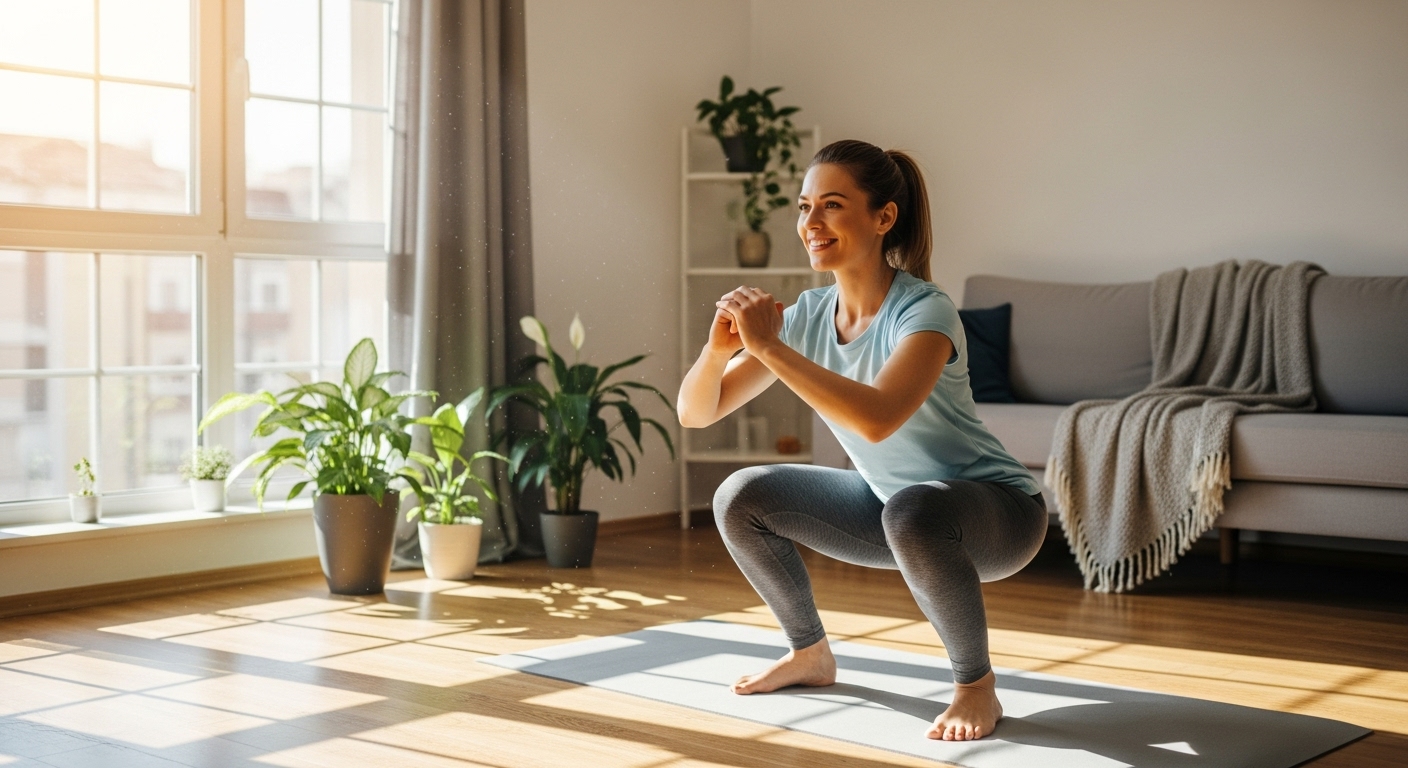
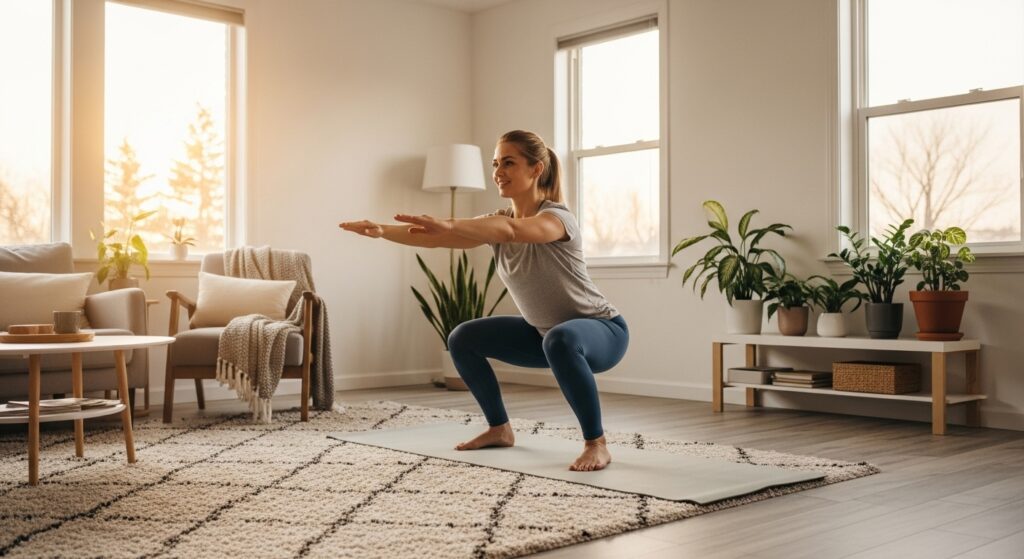
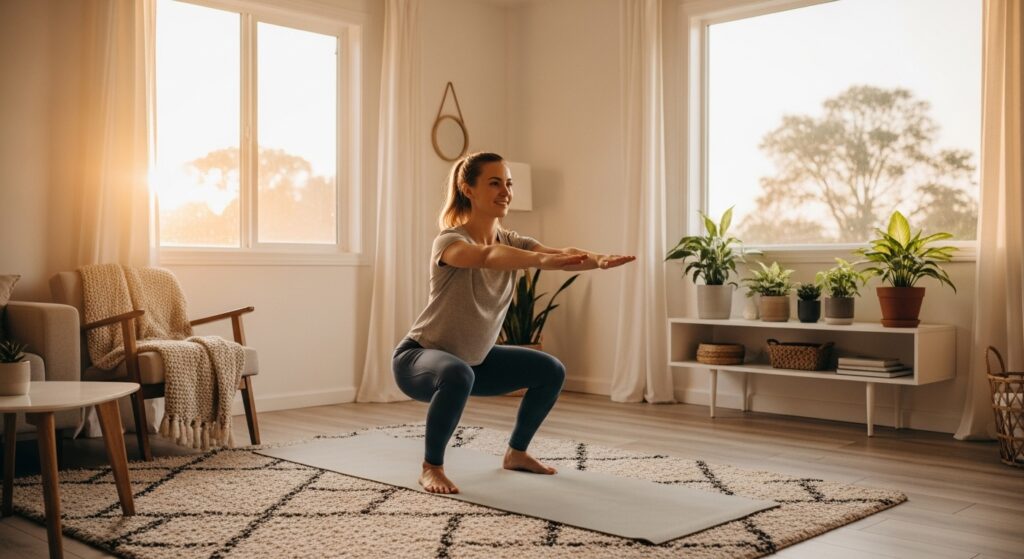
Feet shoulder-width, toes slightly out. Sit back like there’s a chair behind you, thighs parallel to ground, stand tall. Keep chest up—imagine a string pulling your head to the ceiling. Too easy? Slow the descent to 3 seconds.
Exercise 3: Glute Bridges (Glutes, Hamstrings, Lower Back)
Lie on back, knees bent, feet flat. Lift hips until body forms a straight line from knees to shoulders, squeeze glutes hard at top. Lower controlled. Single-leg version later for a challenge.
Exercise 4: Plank Hold (Core, Shoulders, Full Body)
Forearms on ground, elbows under shoulders, body straight. Engage abs like you’re bracing for a punch. Shaking at 20 seconds? Drop to knees. Build to 60 over weeks.
Exercise 5: Mountain Climbers (Cardio, Core)
In high plank, alternate driving knees toward chest quickly. Too intense? Slow to step-ups. This spikes heart rate—hello, fat burn.
Circuit complete? High-five yourself. That’s the ultimate no-equipment workout in action.
Scaling and Progression: Grow Without Overwhelm
Beginners progress fast. When an exercise feels easy (12+ smooth reps), level up. Here’s how:
- Push-ups: Knees → full → diamond (hands close)
- Squats: Bodyweight → pause squats → jump squats
- Plank: Knees → full → side plank
Track in a notebook or app. I log reps weekly—seeing numbers climb is addictive. Plateaus happen; add a fourth round or shorten rest to 15 seconds.
Common Form Mistakes and Fixes
Bad form stalls progress and risks pain. Watch these:
- Sagging hips in plank — Squeeze glutes, imagine a board from head to heels.
- Knees caving in squats — Push knees out over toes, like spreading the floor.
- Neck craning in push-ups — Keep gaze down, neck neutral.
Record yourself once a week. You’ll spot quirks faster than any trainer could point out.
Pairing Workouts with Real Life
Consistency beats intensity. Schedule sessions like meetings—non-negotiable. I tie mine to morning coffee; brew hits, workout starts. Evenings work too if you’re a night owl.
Nutrition matters. Protein repairs muscle—eggs, Greek yogurt, lentils. Don’t starve; fuel the machine. Sleep 7-8 hours; gains happen in bed, not just on the mat.
Rest days? Crucial. Walk, stretch, or dance—just move lightly. I binge Netflix guilt-free on off days knowing I earned it.
Motivation Hacks for the Long Haul
Some mornings, motivation hides. Here’s what pulls me through:
- Playlists—upbeat tracks make mountain climbers fly.
- Habit stacking—workout right after brushing teeth.
- Accountability buddy—text a friend your daily win.
- Visual reminders—sticky note on mirror: “Stronger than yesterday.”
Celebrate milestones. Ten push-ups? Treat yourself to new workout socks. Small wins compound.
Your First Week, Step by Step
Day 1: Try the warm-up + 1 circuit round. Note how you feel.
Day 2: Rest or light walk.
Day 3: Full 3 rounds, film form.
Day 4: Rest.
Day 5: 3 rounds, aim for 2 more reps per move.
Day 6-7: Active recovery—yoga or dance.
By week’s end, you’ll crave the burn. That’s the magic.
Final Thoughts: You’ve Already Started
The ultimate no-equipment workout for beginners isn’t a fad—it’s a lifestyle starter kit. You don’t need weights, just willingness. Start today, even if it’s five minutes. Your future self—that stronger, calmer, prouder version—is cheering you on.
I still remember my first wobbly plank. Now? I hold side planks while cooking stir-fry. If I can, you can. Lace up (or go barefoot), press play, and move. The only bad workout is the one you didn’t do.
Frequently Asked Questions (FAQs)
How many days a week should I do this no-equipment workout?
Start with 3 non-consecutive days—Monday, Wednesday, Friday. This allows recovery while building habit. Once comfortable (2-3 weeks), add a fourth day. I jumped to 4 after a month and saw faster strength gains without burnout.
What if I can’t do a single push-up?
Wall push-ups are your friend—stand arm’s length from a wall, lean in, push back. Or incline on a sturdy couch. I started here; within two weeks, I managed knee push-ups. Progress compounds quickly with consistency.
Can I lose weight with just bodyweight exercises?
Yes, especially paired with a slight calorie deficit. These circuits burn 200-300 calories in 20 minutes and boost metabolism. I dropped 8 pounds in 6 weeks by adding walks and swapping soda for water. Movement + mindful eating = results.
Is 20 minutes enough for beginners?
Absolutely. Intensity matters more than duration. Three focused rounds fatigue muscles effectively. Studies show short HIIT sessions rival hour-long gym workouts for fat loss and fitness gains. Quality trumps quantity every time.
Will I get bulky from no-equipment training?
Unlikely without heavy weights and surplus calories. Bodyweight builds lean, functional muscle—think toned, not bulky. I firmed up without adding size, perfect for everyday strength. Women especially needn’t worry; testosterone levels make bulking rare.
How do I know I’m progressing?
Track reps, hold times, or how exercises feel. Week 1 plank shaky at 15 seconds? Week 4 steady at 45? That’s progress. Take monthly photos too—visual changes motivate. I celebrate every new rep like a personal record.