
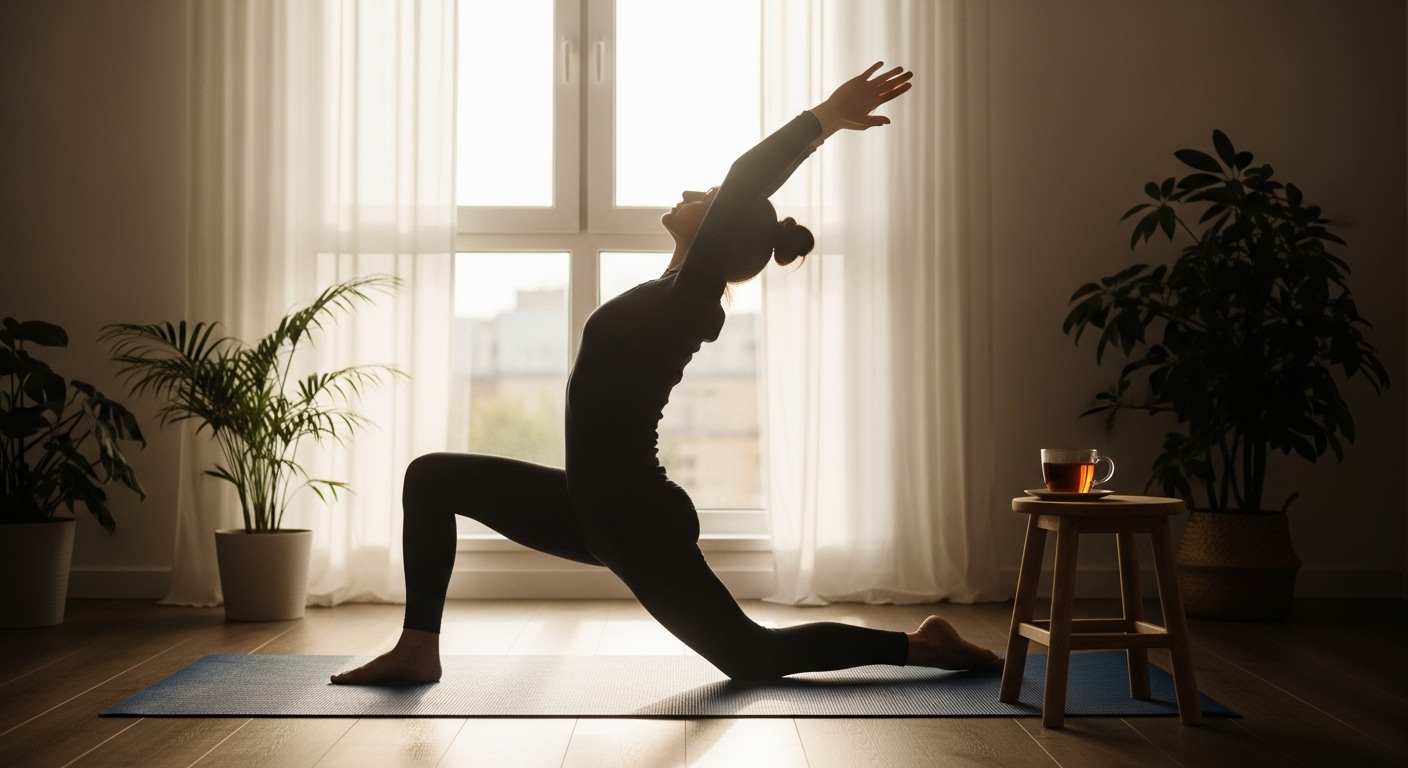
If there’s one ritual that quietly rewired how I move through the day, it’s a simple morning yoga flow for flexibility and stress relief. Honestly, it felt almost too gentle at first — a few sun salutations, a couple of breathy twists — and then, slowly, the tightness in my shoulders began to ease and my mind stopped racing before coffee.
Most people don’t realize how much their body holds onto yesterday’s tension. A short, consistent practice in the morning can reset that hold and make your whole day feel lighter. If you ask me, it’s practical self-care that actually sticks.
What a morning yoga flow actually does
Here’s the tricky part: flexibility is only part of the benefit. Yes, you get looser muscles — especially hips, hamstrings, and the low back — but the real magic is nervous system regulation.
When you combine slow movement with mindful breathing first thing, your body cues the parasympathetic nervous system: your “rest and digest” mode. That reduces cortisol, calms rumination, and helps you show up calmer for whatever the day throws at you.
Quick benefits you’ll notice (even after one week)
- Increased mobility: simple joints and muscle systems respond fast when given consistent movement.
- Less morning stiffness: you’ll reach for your shoes without wincing.
- Better mood regulation: fewer micro-explosions of anxiety during email time.
- Improved breath awareness: which helps in stressful meetings or parenting moments.
How to structure a 15–25 minute morning yoga flow
Below is a practical sequence you can do in 15–25 minutes. It’s designed for flexibility and stress relief, and you can scale it shorter or longer based on how sleepy the kids are or how many emails already arrived.
1. Centering & breath — 2–3 minutes
Sit or lie comfortably. Take slow nose inhales for 4 counts and long exhales for 6. Do 6–8 rounds. This sets the tone and begins the calming cascade.
2. Gentle wakening — 3–5 minutes
- Cat–Cow x 8 (slow and tactile)
- Thread-the-needle each side x 4 (shoulder opener)
- Child’s pose with long breaths for 30–60 seconds
3. Dynamic flow — 6–10 minutes
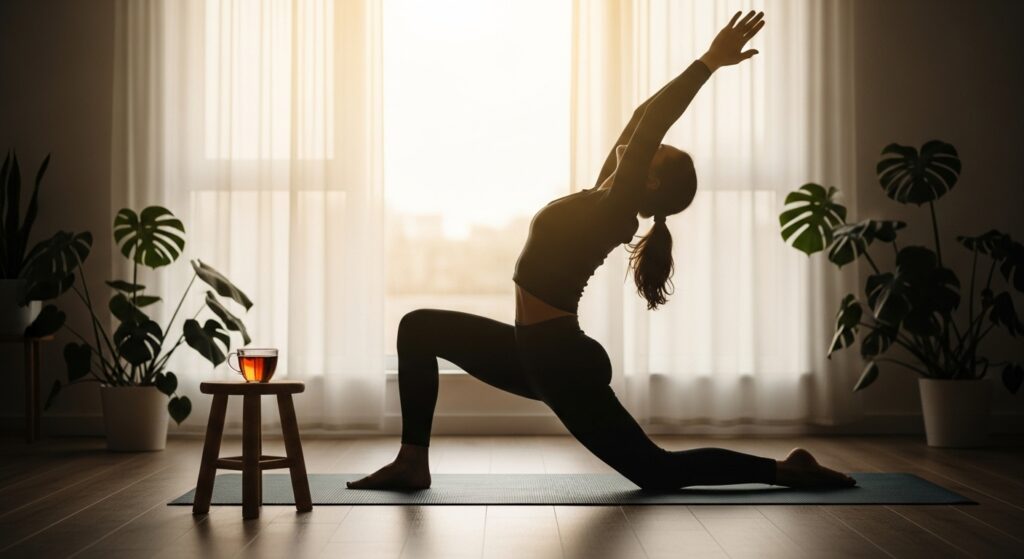
Move through 3–5 sun salutations, but soften the snap. Add lunges with gentle rotations to open hips and thoracic spine. Remember: movement equals lubrication.
4. Targeted holds for flexibility — 5–8 minutes
- Pigeon pose (or figure-four seated) — 1–2 minutes per side
- Seated forward fold with long exhales — 60–90 seconds
- Knee-to-chest + gentle twist — 30 seconds per side
5. Short closing rest — 2–3 minutes
Finish in Savasana (or a comfortable reclined position). Let breath return to natural rhythm. Put a hand over your heart and notice how much quieter your mind feels.
Practical tips — because life gets in the way
- Do it before your phone: trust me, the world can wait two minutes.
- Keep the mat visible: leaving it rolled out lowers activation energy.
- Use props: a block or towel can make poses accessible and more relaxing.
- Be imperfect: missed a day? So what. Keep going tomorrow.
In my experience, the most sustainable routine is one you actually enjoy and can adapt. That might mean a brisk 10-minute sequence on chaotic mornings and a luxurious 25-minute practice on weekends.
How morning yoga helps stress relief — the small science of it
We don’t need to dive into dense physiology to get this: breath and movement influence the vagus nerve, which acts like a dimmer switch for stress reactions. Slow exhalations, gentle twists, and soft holds tell the body: “You’re safe.”
Most people don’t feel that shift immediately, but after several consistent mornings, you’ll catch yourself responding differently — less reactive, more able to breathe through a sudden stressful call or a tense conversation.
Modifications for different bodies and goals
- Busy parent: try a 10-minute core-to-hip opener routine beside a sleeping child.
- Desk worker: add extra thoracic mobility and hip flexor stretches to counter sitting.
- Beginner: skip deep lunges, use a chair for balance, and shorten holds.
- Advanced: lengthen holds, add binds, or include breath retention if comfortable.
Whatever your level, the aim is the same: morning yoga flow for flexibility and stress relief — not to perform, but to arrive to your day with more presence and less tension.
When to expect results
If you practice consistently for two weeks, most people notice improved mobility and lower baseline stress. For some, even a single week makes a difference: better mood, deeper breathing, and easier movement.
Long-term changes — like sustained flexibility and meaningful shifts in stress reactivity — happen over months. That said, the beauty is in the daily tiny wins: a calmer commute, less nagging shoulder pain, and a clearer head before breakfast.
Sample 10-minute morning sequence (copy-and-go)
- 00:00–01:00 — Seated breathwork (4:6 inhale:exhale)
- 01:00–03:00 — Cat–Cow + Thread-the-needle
- 03:00–06:00 — 3 slow Sun Salutations (softly)
- 06:00–08:00 — Low lunge + rotation (1 min each side)
- 08:00–09:30 — Seated forward fold (90 seconds)
- 09:30–10:00 — Savasana with hand on heart
Final thoughts — a gentle invitation
Let’s face it: starting anything new feels awkward. But a morning yoga flow for flexibility and stress relief doesn’t demand perfection. It asks only for a little curiosity and consistency. Try it for two weeks and notice the tiny, cumulative shifts.
If you’re someone who lives in your head, this practice gives you back your body as an ally — and that, more than any quick fix, changes how you weather the day.
Frequently Asked Questions (FAQs)
How long should a morning yoga flow be for beginners?
Start with 8–10 minutes. Short, consistent sessions beat sporadic long practices. Focus on breath and gentle movement — even five minutes daily will help reduce stiffness and calm your mind.
Can morning yoga replace my workout?
It depends on your fitness goals. Morning yoga is excellent for mobility and stress relief but may not be enough for strength or cardio goals. You can combine it with other workouts or add more dynamic sequences.
What’s the best time in the morning to practice?
Do it whenever you can be consistent — immediately after waking is ideal because your nervous system hasn’t been hijacked by stressors. Even 10 minutes before breakfast is powerful.
Do I need to be flexible to start morning yoga?
No. Flexibility improves with regular practice. Use props and modify poses. The goal is ease and breath, not touching your toes on day one.
Will morning yoga help with anxiety?
Yes — combined breathwork and movement can lower cortisol and promote parasympathetic activation, which reduces anxiety symptoms for many people. It’s a supportive tool, not a replacement for therapy when needed.