
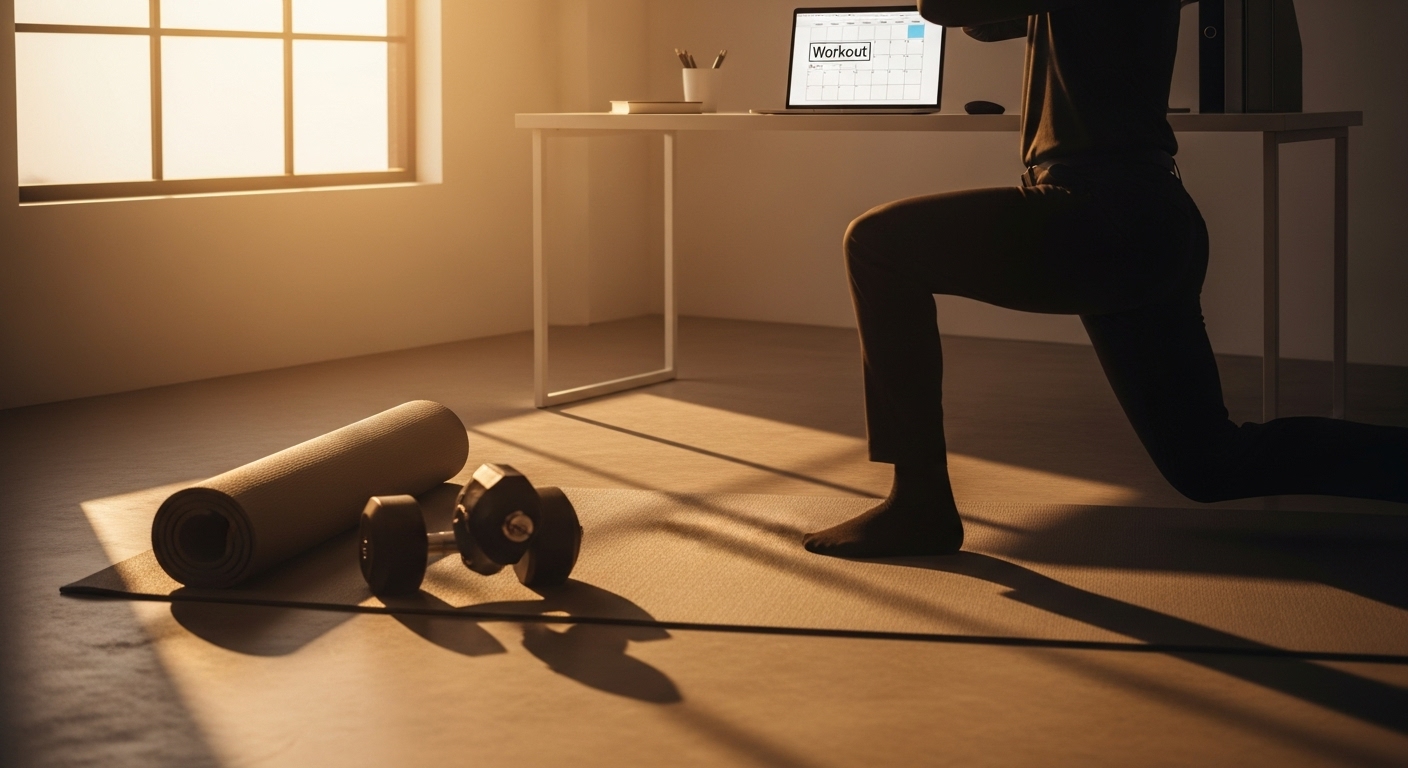
Let’s be honest: climbing the ladder at a fast-moving tech company often means long Zoom days, back-to-back meetings, and a tendency to live off coffee and whatever’s easiest to order. In my experience, that pressure makes health slide fast — unless you build tiny systems that actually fit into your day.
If you’re reading this because you want to perform at a high level *and* avoid burning out, you’re in the right place. This article breaks down realistic, no-nonsense strategies for how to stay fit while working a 9-to-5 desk job — strategies that respect your schedule and still move the needle on fitness, energy, and longevity.
Why conventional “workout more” advice fails
Most fitness advice assumes you have a chunk of free time, a spotless schedule, or a gym membership you actually use. That’s not helpful if your calendar is a living organism that mutates hourly. Here’s the tricky part: the problem is rarely motivation. It’s logistics and friction.
When you understand the real barriers — calendar density, decision fatigue, and the tiny choices that add up — you can design around them. That’s the high-performance way: work with constraints, not against them.
Core principles for busy professionals
- Micro-doses beat bingeing — short, consistent movement sessions add up more than sporadic long workouts.
- Design for the calendar — put fitness into existing habits so it’s non-negotiable.
- Prioritize compound wins — strength + mobility + cardio in small doses gives big returns.
- Measure what matters — energy, sleep, mood, and functionality over a number on a scale.
Practical daily framework (15–30 minutes)
You don’t need an hour every morning. Try this 20-minute daily framework that’s easy to slot between emails and standups. It’s built for the person who wants results without rewriting their life.
Warm-up (3–4 minutes)
- Quick joint mobility: neck rolls, shoulder circles, hip hinges.
- 30–60 seconds of brisk marching or jumping jacks to raise heart rate slightly.
Strength + mobility circuit (10–15 minutes)
- Push variations (push-ups or incline push-ups) — 3 sets of 8–12.
- Hip-focused moves (reverse lunges or split squats) — 3 sets of 8–12 per side.
- Core/stability (plank variations or dead bugs) — 3 x 30–60 seconds.
- Finish with loaded carries or farmer walks if space allows — 2 x 60 seconds.
Short conditioning (2–5 minutes)
Tabata sprint on a bike, jump rope intervals, or a brisk stair climb — you pick. The goal is to maintain cardiovascular health without needing long runs.
Weekly blueprint: combine focus and flexibility
One of the best systems I’ve seen for ambitious professionals is the 3/2 split: three focused strength sessions and two mobility/conditioning sessions per week. That’s enough stimulus to maintain and build, but not so much it competes with your work.
- Mon — Strength (30–40 min): full-body emphasis, heavier compound lifts if you can access a gym.
- Wed — Mobility + Conditioning (25–30 min): mobility flow + 10–15 minutes HIIT.
- Fri — Strength (30–40 min): similar to Monday; dial intensity based on how the week treated you.
- Sat or Sun — Active recovery: long walk, hike, or a restorative yoga session.
Micro-habits you can start today
These are tiny, low-friction actions that sneak fitness into your workday without requiring heroic willpower.
- Meeting movement: stand or pace during one-on-one calls. Take phone calls on a walk when possible.
- Pomodoro breaks: every 50 minutes, do 2 minutes of mobility or bodyweight squats.
- Standing desk rituals: set a timer to alternate sitting and standing (30–45 min blocks).
- Lunch power-walk: 15–20 minutes brisk walk after eating stabilizes blood sugar and clears your head.
- Desk stretches: simple thoracic rotations, hip flexor stretches, and wrist circles to fight the sitting posture.
[Insert Image 2 Here]
Nutrition and recovery — the invisible performance boosters
You can train hard and still feel flat if your nutrition and sleep are poor. Aim for pragmatic wins that fit a high-performance schedule.
- Protein at each meal: helps preserve muscle when your training volume is low.
- Prep smarter: batch-cook simple proteins and veggies for the week — fewer decisions, better choices.
- Hydration triggers: drink a glass of water before each meeting or after every call.
- Sleep priority: consistent sleep windows beat late-night “hustle” culture every time.
How to stay motivated when work gets insane
If you ask me, motivation is a poor strategy for a career climber. Systems are where you win. Still, keep your why visible: better focus, less stress, more energy, and the durability to stay in the game for years — not months.
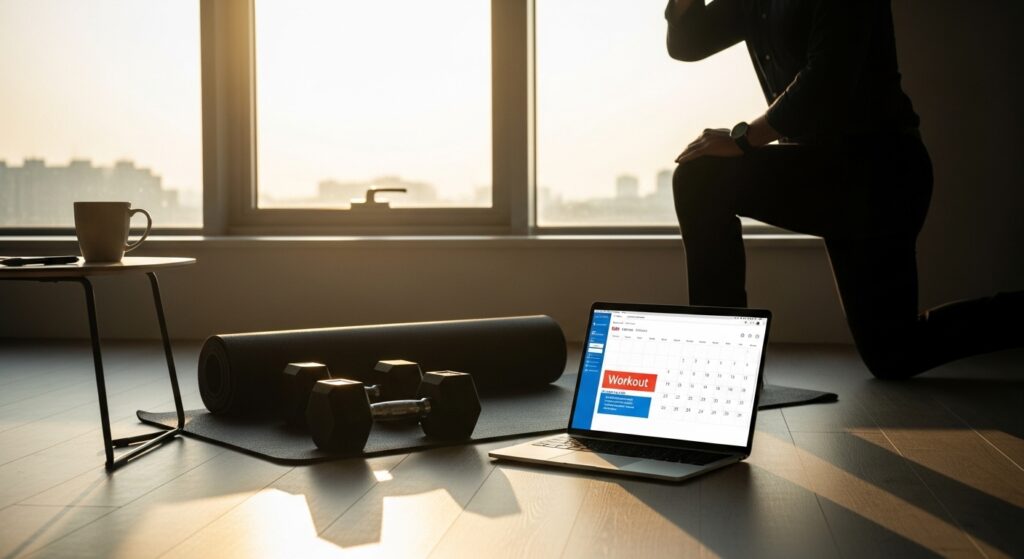
Schedule your workouts like a meeting with your future self. Block the calendar, set a recurring reminder, and treat the slot with the same respect as a high-impact client meeting.
Tools and technology I recommend
- Wearable for movement nudges: gentle reminders to stand and move.
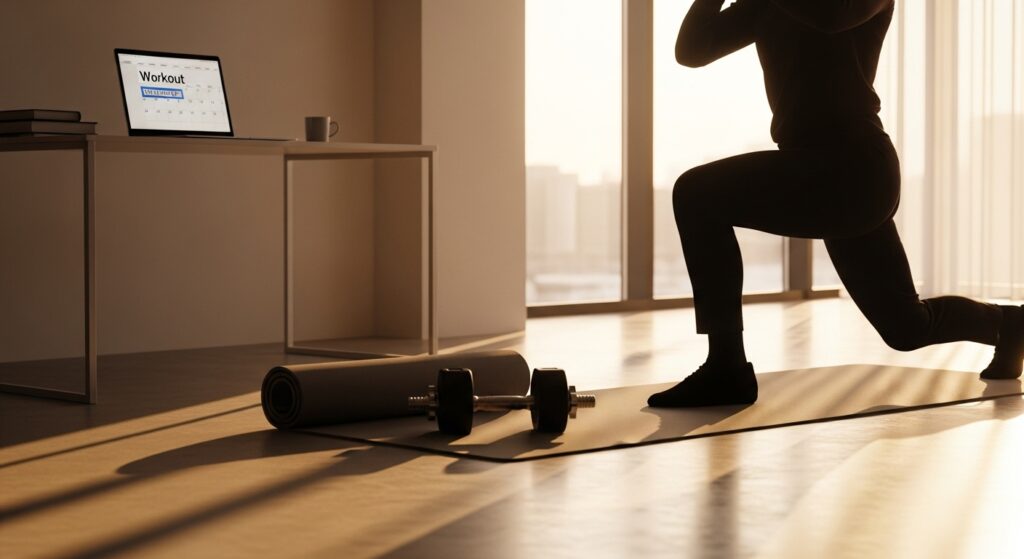
- Simple home kit: adjustable dumbbells, a kettlebell, and a resistance band cover 80% of needs.
- Short workout apps: prioritize apps with 10–25 minute strength or HIIT options.
- Accountability partner: a colleague or friend who shares similar goals makes sticking to the plan far easier.
Final checklist — a morning ritual for high performers
- Wake, hydrate, 5-minute mobility warm-up.
- 20-minute strength or movement session (even on heavy workdays).
- Quick protein-forward breakfast, then tackle your most important work.
Remember: you’re designing a career that lasts. Learning how to stay fit while working a 9-to-5 desk job isn’t about perfection; it’s about engineering a lifestyle that keeps you sharp and resilient when stakes are high.
Frequently Asked Questions (FAQs)
How much exercise do I need if I sit all day?
Aim for at least 150 minutes of moderate-intensity aerobic activity weekly plus two strength sessions. If that feels impossible, start with micro-sessions (10–20 minutes) and build consistency — the cumulative effect is what matters.
What’s the best way to build a routine with unpredictable hours?
Anchor workouts to immovable parts of your day (e.g., right after waking or before dinner). Use calendar blocks and treat those blocks like non-negotiable meetings. Flexibility matters, but consistency beats intensity for long-term results.
Can I get fit without a gym membership?
Absolutely. Bodyweight exercises, resistance bands, kettlebells, and walking all provide major benefits. Focus on progressive overload (more reps, sets, or difficulty) and you’ll see gains even at home.
How do I avoid injury when I’m short on time?
Prioritize quality over quantity. Warm up with mobility, keep good technique, and choose manageable loads. If something feels sharp or unstable, regress the movement — consistency matters more than ego.
What’s the one habit that gives the biggest return?
Daily movement consistency. Even short, daily sessions that combine strength and mobility dramatically improve energy, posture, and resilience — which all feed back into better work performance.