
It hits you at 3 PM on a Tuesday. Your heart starts doing that weird pitter-patter thing, your shoulders have officially become earrings, and every email notification sounds like a personal attack. You’re not just busy—you’re officially stressed. And your first instinct might be to reach for a sugary snack or a third cup of coffee, which, let’s be honest, only makes the jitters worse.
I’ve spent years in that cycle. I used to think stress management was about meditation apps I’d never use or forcing myself to do yoga. But what I’ve discovered—through plenty of trial and error—is that the most powerful tools are often the simplest. They’re the foods in your kitchen, the herbs in your pantry, and the tiny, five-minute habits woven into your day that collectively tell your nervous system, “Hey, we’ve got this.”
This isn’t about a complete lifestyle overhaul overnight. It’s about building a toolkit of simple, effective foods, herbs, and habits that naturally lower stress levels and help you feel grounded when life gets chaotic.
Your Kitchen First-Aid Kit: Stress-Busting Foods
What you eat directly influences your body’s stress response. It’s not magic—it’s biochemistry. When you’re stressed, your body burns through certain nutrients like a car burning through gas on a steep hill. Replenishing them is one of the most direct ways to support your system.
1. The Magnesium Marvels
Magnesium is often called nature’s tranquilizer, and for good reason. It plays a crucial role in regulating your nervous system and the stress hormone cortisol. The problem? Stress depletes magnesium, and a deficiency makes you more susceptible to stress. It’s a vicious cycle.
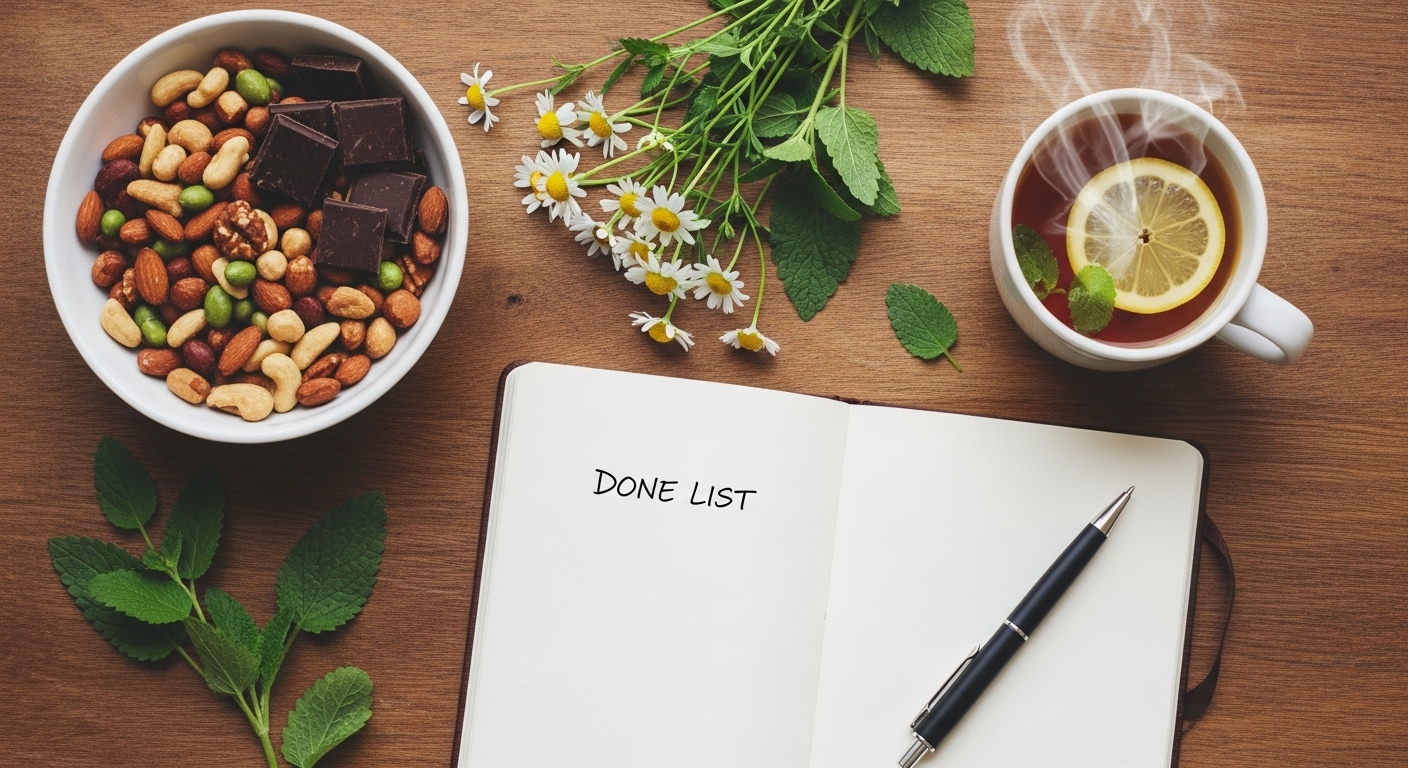
Reach for: Dark leafy greens (spinach, kale), almonds, pumpkin seeds, black beans, and dark chocolate (70% or higher—my personal favorite). Adding a handful of spinach to a smoothie or snacking on a few almonds can make a noticeable difference.
2. The Vitamin C Heroes
We usually think of Vitamin C for immunity, but it’s also a powerhouse for managing stress. Your adrenal glands (which pump out cortisol) have one of the highest concentrations of Vitamin C in your body. They need it to function properly.
Reach for: Bell peppers (especially the red and yellow ones), oranges, strawberries, broccoli, and kiwi. They’re like little stress-support packages.
3. The Complex Carb Comforters
This one might surprise you. Quality complex carbohydrates help boost serotonin, a brain chemical that promotes a sense of calm and well-being. The key is to choose slow-burning carbs that won’t spike your blood sugar.
Reach for: Oatmeal, sweet potatoes, quinoa, and whole-grain bread. A bowl of oatmeal in the morning can set a calmer tone for your entire day.
Nature’s Pharmacy: Calming Herbs and Teas
Beyond the food on your plate, there’s a world of gentle herbal support. These aren’t quick fixes, but rather tonics that help your body build resilience over time.
1. Ashwagandha: The Adaptogen King
If there’s a rockstar in the world of stress-supporting herbs, it’s ashwagandha. It’s an adaptogen, meaning it helps your body “adapt” to physical and mental stress. I was skeptical until I tried it. The difference for me wasn’t a feeling of being sedated, but rather a sense of having a wider buffer between me and life’s irritations.
How to use it: Look for a high-quality powder you can mix into a latte or a smoothie, or a standardized supplement. The earthy taste takes some getting used to, but it’s worth it.
2. Chamomile: The Classic Soother
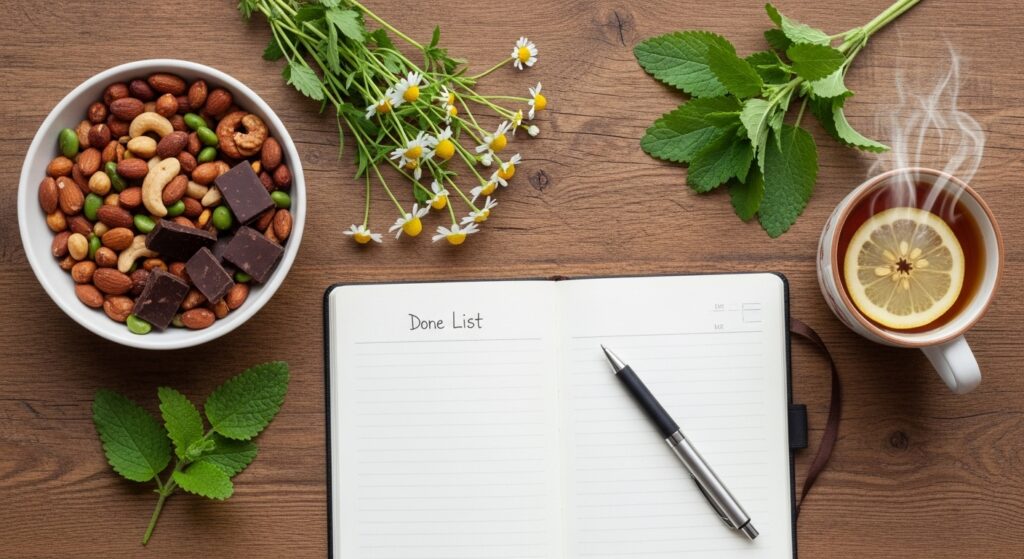
Your grandma was onto something. Chamomile isn’t just a gentle sleep aid; it acts as a mild sedative to calm nerves thanks to an antioxidant called apigenin. A cup of chamomile tea is like a warm hug for your central nervous system.
How to use it: Steep a strong cup of tea in the afternoon when stress starts to creep in or 30 minutes before bed to wind down.
3. Lemon Balm: The Uplifting Calm
Lemon balm is like a ray of sunshine in herb form. It’s been shown to reduce the symptoms of anxiety and promote relaxation without making you drowsy. It’s perfect for when you need to be calm but still sharp.
How to use it: Fresh or dried in tea, or as a tincture. The gentle lemon scent is instantly uplifting.
The 5-Minute Habits That Change Everything
You can eat all the right foods, herbs, and habits that naturally lower stress levels, but if you’re constantly go-go-going, it’s like pouring water into a bucket with a hole in the bottom. These tiny habits are how you patch the hole.
1. The “Phone-Free First 5” Minutes of Your Day
This one habit has been a game-changer for me. Before you check emails, social media, or the news, give yourself just five minutes. Look out the window. Stretch. Breathe. Drink a glass of water. It sets a tone of intentionality instead of reactivity, and that calm can ripple through your entire day.
2. The Sensory Reset
When you feel overwhelmed, your brain is in overdrive. The fastest way to pull it out is through your senses. It’s a technique called grounding.
- Find 5 things you can see.
- Find 4 things you can feel (your feet on the floor, the fabric of your shirt).
- Find 3 things you can hear.
- Find 2 things you can smell.
- Find 1 thing you can taste.
It takes 60 seconds and it works every time.
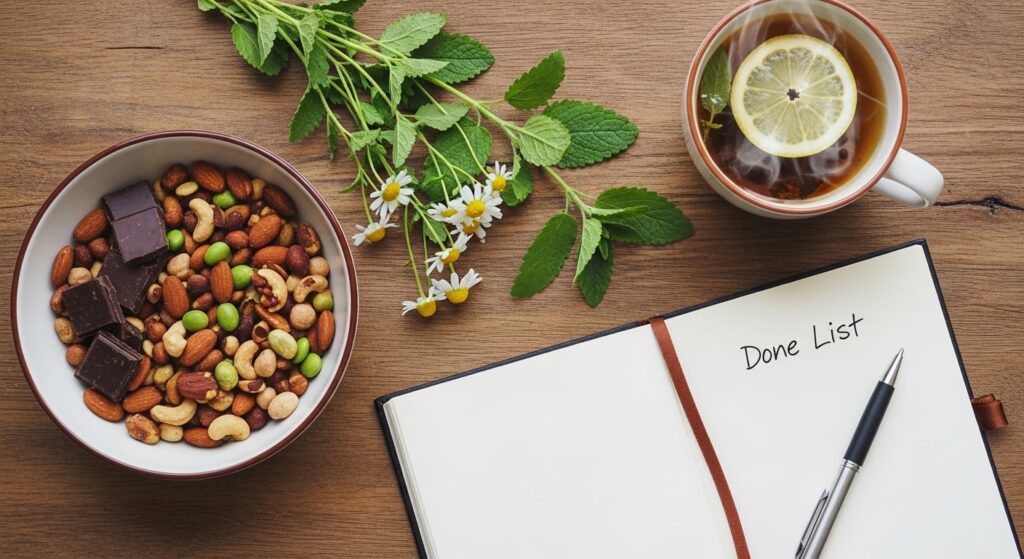
3. The “Done List”
We’re so focused on our to-do lists that we end the day feeling like failures for what we didn’t accomplish. Try this instead: before you shut down for the day, write down three things you did complete. It rewires your brain to focus on accomplishment, not lack, which is a powerful antidote to stress.
Weaving It All Together
You don’t need to do everything at once. That would be, well, stressful! The beauty of these foods, herbs, and habits that naturally lower stress levels is that they’re modular.
Maybe this week, you start by adding a magnesium-rich food to your lunch and trying the “Phone-Free First 5.” Next week, you might explore a cup of chamomile tea in the evening.
It’s about building your own personal stress-support system, one gentle, nourishing step at a time. Your calm is waiting—and it might just be in your kitchen cupboard.
Frequently Asked Questions (FAQs)
How long does it take for these foods and herbs to work?
It depends. Some habits, like the sensory reset, provide immediate relief. For dietary changes and herbs like ashwagandha, give it at least 2-4 weeks of consistent use to notice a significant shift. They work cumulatively to build your body’s resilience, not as instant fixes.
Can I take ashwagandha if I’m on medication?
It’s always best to consult with your doctor or a qualified herbalist before starting any new herb, especially if you are on medication for thyroid, blood pressure, anxiety, or depression, as there can be interactions.
I don’t have time to cook elaborate meals. Any quick stress-busting snacks?
Absolutely! Keep it simple. A handful of almonds and a square of dark chocolate. An apple with a tablespoon of peanut butter. A pre-made hard-boiled egg. A small cup of full-fat Greek yogurt with berries. These are all quick, nutrient-dense options that support stable energy and mood.
Is it possible to get enough magnesium from food alone?
It can be challenging, especially if you’re under chronic stress, which depletes stores. Focusing on magnesium-rich foods is a great foundation. If you’re considering a supplement (like magnesium glycinate, which is well-absorbed), it’s wise to discuss it with a healthcare provider first.
What’s the one most important habit to start with?
If I had to pick one, it would be the “Phone-Free First 5” minutes. It costs nothing, takes no time, and fundamentally changes the tone of your day from reactive to centered. It’s the foundation upon which other healthy habits can be built.