
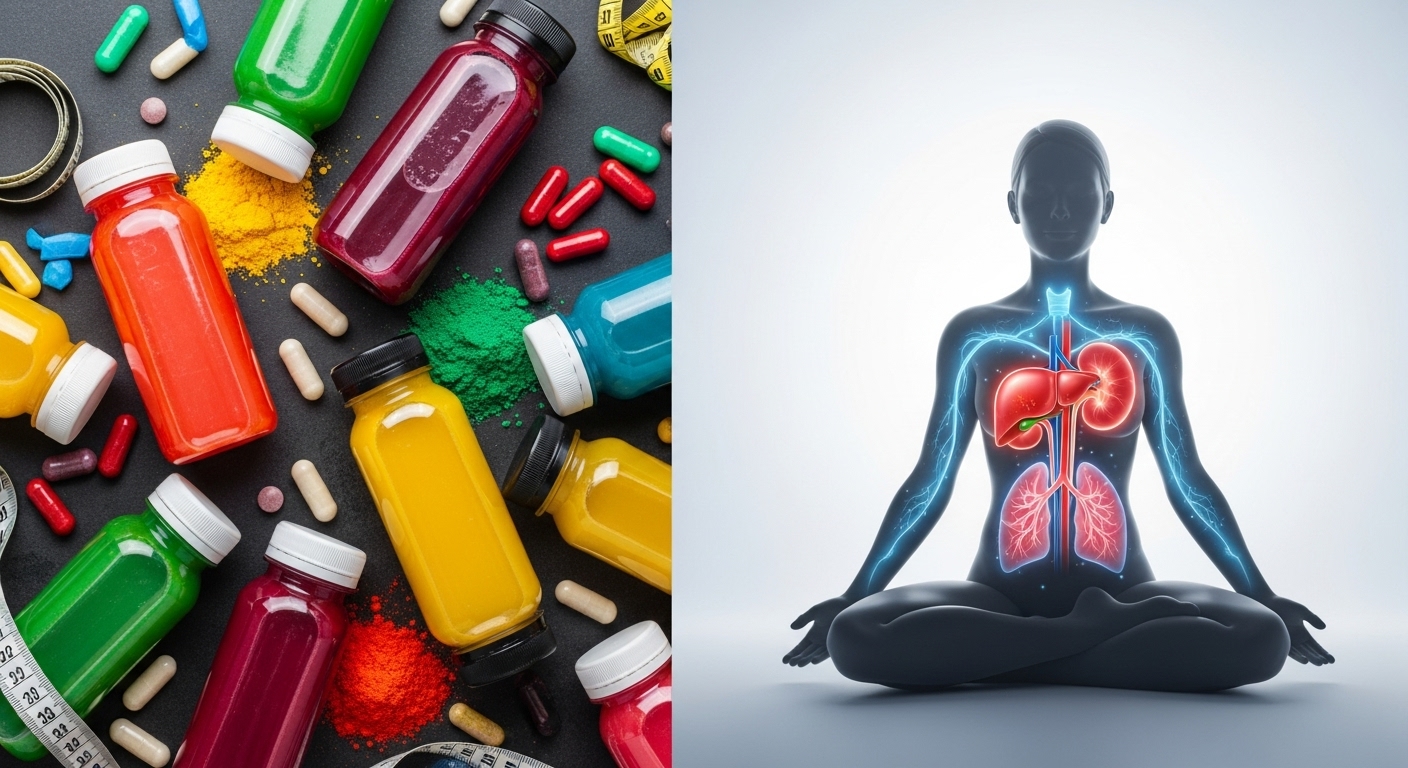
It starts subtly. Maybe you see a before-and-after photo that’s a little too perfect. Or a friend swears she’s “cleansing” with a special tea that promises to flush out… well, something. Suddenly, your social media feed is a cascade of green juices, lemon-cayenne water, and promises of renewed energy and “flushing toxins.” You start to wonder, “Should I be doing that too?”
I’ve been there. After a particularly indulgent holiday season a few years back, I fell for it. I bought the special powders, choked down the bitter teas, and spent three miserable days feeling hungry, headachy, and utterly obsessed with solid food. And for what? The moment I stopped, the “toxins” didn’t magically stay away. I felt like I’d been sold a lie.
So, let’s pull back the curtain. When we look at what science actually says about detox diets, the story is far less glamorous—and far more interesting—than the marketing would have you believe.
Your Body Already Has a World-Class Detox System
Here’s the fundamental truth that the wellness industry hopes you’ll overlook: you are already detoxifying. Right now. As you read this. You have a built-in, highly sophisticated, 24/7 purification system that no juice cleanse could ever hope to match.
Let’s meet the all-star team, shall we?
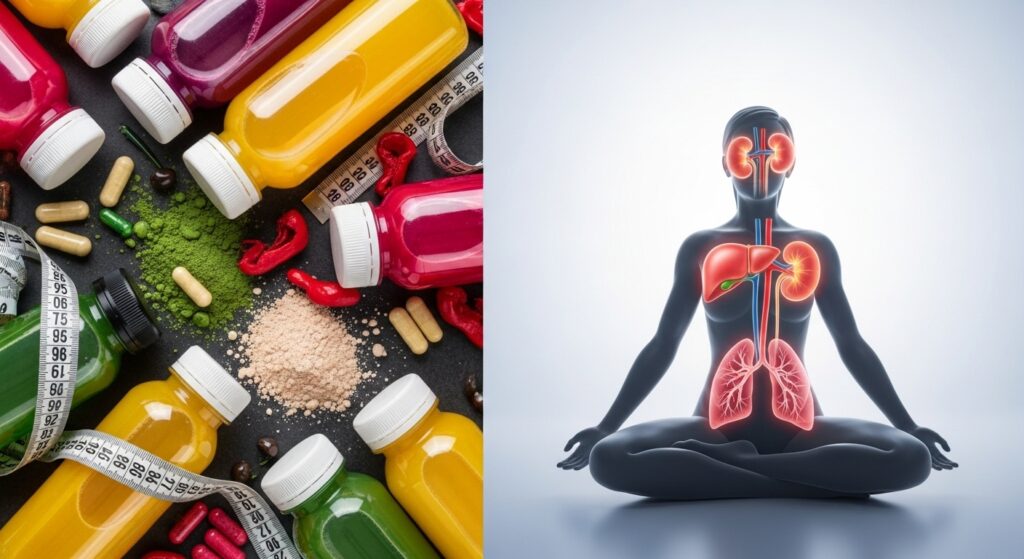
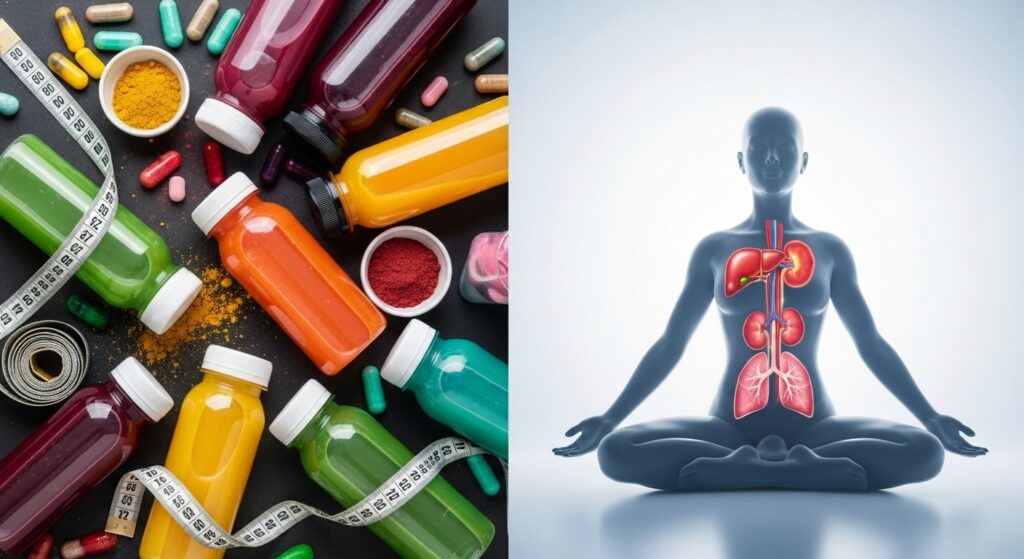
- Your Liver: This is your body’s ultimate chemical processing plant. It doesn’t just filter your post-party cocktail; it neutralizes a vast array of waste products, medications, and environmental chemicals, rendering them harmless.
- Your Kidneys: These two hardworking beans are your master filtration system, constantly cleaning your blood and flushing waste out through your urine.
- Your Lungs: They filter out carbon dioxide and other airborne particles with every exhale.
- Your Skin & Gut: Through sweat and digestion, your body has multiple exit routes for things it doesn’t want.
The idea that you need a special, expensive diet to “activate” or “rest” these organs is, frankly, a bit insulting to your own biology. They’re already working at peak efficiency. In fact, the concept of “flushing toxins” is so vague that most cleanse companies can’t even name the specific toxins they’re supposedly removing.
The “Benefits” Are Usually Just… Side Effects
Now, you might be thinking, “But I know someone who did a cleanse and lost weight and felt amazing!” I don’t doubt it. But let’s break down why that happens, because it’s not for the reasons you might think.
That initial burst of energy and clarity? It’s likely because you’ve cut out processed foods, alcohol, and sugar. Of course you feel better! You’ve essentially given your digestive system a break from junk. But you could achieve the same thing by simply eating more fruits, vegetables, and whole foods—without the starvation.
The weight loss? It’s almost always water weight and the contents of your digestive tract. The moment you start eating normally again, that weight comes rushing back. More dangerously, very low-calorie detox diets can cause your body to break down muscle for energy, which actually slows down your metabolism in the long run.
And that “glow”? Dehydration and mild malnutrition can sometimes make your cheekbones look more prominent, but it’s not a sign of health. The headaches, fatigue, and irritability—dubbed the “detox headache”—are more accurately signs of calorie deprivation and caffeine withdrawal.
So, What Actually Helps Your Natural Detox System?
If you truly want to support your body’s innate cleaning crew, you don’t need a radical, short-term shock. You need consistent, boring, wonderfully effective habits. Think of it as being a good manager to your internal staff—you provide them with the right resources so they can do their jobs well.
1. Hydrate, But Just with Water
Your kidneys adore water. It’s their primary tool for filtering waste. Instead of chugging expensive, sugary “detox” drinks, just focus on drinking enough plain water throughout the day. If you’re thirsty, you’re already mildly dehydrated.
2. Feed Your Gut Fiber
Fiber is like a broom for your digestive system. It helps move waste along and supports a healthy gut microbiome, which plays a role in how we process certain compounds. Think fruits, vegetables, whole grains, and legumes—the very foods most detox plans lack.
3. Prioritize Sleep
This is the big one most people ignore. Your brain has its own waste-clearance system, called the glymphatic system, which kicks into high gear during deep sleep. Skimping on sleep means your brain isn’t getting its full “deep clean” each night.
4. Move Your Body
Regular exercise improves circulation and promotes sweating, which is a natural (if minor) pathway for excreting salts and metals. You don’t need to run a marathon; a brisk walk will do the trick.
The Real “Toxins” We Should Be Worried About
It’s ironic, isn’t it? We’ll spend a small fortune on a juice cleanse while ignoring the modern-day toxins that genuinely impact our health. If you’re looking for a meaningful cleanse, try this one instead:
- The Digital Detox: The constant barrage of bad news and social comparison is a genuine toxin for mental health.
- The Negativity Cleanse: Audit the people and media you allow into your life. Limit time with those who drain your energy.
- The Ultra-Processed Food Purge: This is the single most effective dietary “cleanse.” Focus on reducing packaged foods with long, unpronounceable ingredient lists.
This approach supports your body’s natural processes without the deprivation, expense, or false promises of a traditional detox diet.
The Final Verdict: Listen to Your Body, Not the Hype
At the end of the day, the science is clear. There is no magic bullet. There is no shortcut. The best way to “detox” is to live a consistently healthy lifestyle that supports the incredible, self-cleaning system you were born with.
So, the next time you feel the pull of a quick fix, remember this: your body isn’t a dirty house that needs a frantic, once-a-year spring cleaning. It’s a magnificent, self-regulating temple that just needs steady, loving upkeep. Save your money, skip the misery, and have a nice glass of water and a crisp apple instead. Your liver will thank you for it.
Frequently Asked Questions (FAQs)
What about detox teas and supplements? Are they safe?
Many contain laxatives like senna or diuretics like dandelion root. While they might make you feel “lighter” by causing water loss and bowel movements, this isn’t true detoxification. Overuse can lead to dehydration, electrolyte imbalances, and dependency for bowel function. It’s always best to consult a doctor before taking any detox supplement.
I feel bloated after eating. Doesn’t that mean I need a cleanse?
Not necessarily. Bloating is a common sign of food intolerances (like to lactose or gluten), eating too quickly, or an imbalance in your gut bacteria. A drastic cleanse might mask the symptoms temporarily, but it won’t solve the root cause. A food diary or consultation with a dietitian is a more scientific approach.
Are there any proven medical uses for detoxification?
Yes, but it’s not what you see in wellness blogs. Medical detox is a supervised process used to safely manage the acute physical symptoms of withdrawal from addictive substances like alcohol or opioids. This is a life-saving medical procedure, not a lifestyle choice for general wellness.
Can’t a detox at least be a good “jump start” to healthier eating?
Psychologically, it can feel that way. But research in habit formation shows that extreme, short-term changes rarely lead to lasting results. They often create a cycle of deprivation and bingeing. A more sustainable approach is to make one or two small, healthy swaps each week, like adding a vegetable to every meal or swapping soda for sparkling water.
What about heavy metals? Don’t we need special diets to remove those?
The term “heavy metal detox” is particularly dangerous. Chelation therapy for proven heavy metal poisoning is a serious medical treatment administered intravenously in a clinical setting. DIY diets or supplements are not effective for this and can prevent people from seeking real medical help for genuine poisoning.