
Ever had one of those days where your to-do list laughs at you, the kids are screaming, and your inbox looks like a war zone? Yeah, me too. Last month, I hit send on a work email, then realized I’d attached the wrong file—while dinner burned and my phone buzzed with daycare pickup reminders. Heart racing, palms sweaty, total meltdown incoming. But here’s what I’ve learned the hard way: you can learn how to stay calm when life gets overwhelming. It’s not about zen mastery; it’s about practical tools that actually work when chaos hits.
I’m no guru on a mountaintop. I’m a real person who’s clawed back from panic more times than I’d like to admit. Let’s walk through the strategies that pulled me out—and might just save your sanity too.
Why Overwhelm Feels Like a Tsunami
Let’s face it—modern life is designed to overload us. Notifications ping, deadlines loom, and everyone needs a piece of you. Your brain’s amygdala (that ancient alarm system) flips into fight-or-flight over a late email. Cute for cavemen dodging tigers, brutal for 21st-century parents.
A 2024 APA survey found 77% of adults feel overwhelmed regularly. You’re not weak; you’re human. That said, chronic stress shrinks your prefrontal cortex—hello, bad decisions. Time to fight back with calm.
Step 1: The 4-7-8 Breath That Stops Panic Cold
Most people don’t realize breathing is your built-in off switch. I discovered Dr. Weil’s 4-7-8 technique during a 2 AM anxiety spiral. Inhale 4 counts, hold 7, exhale 8. Four rounds. Boom—heart rate drops, cortisol dips.
Picture this: traffic jam, kids fighting in the back. Instead of yelling, I breathe. They calm seeing me calm. Science backs it—a 2023 Psychophysiology study showed it reduces anxiety 62% in minutes. Keep it in your back pocket.
Step 2: The “Brain Dump” to Declutter Your Mind
Your head’s a browser with 47 tabs open. Close them. Grab a notebook, set a 5-minute timer, write everything swirling—groceries, that awkward convo, bills. No filter.
I do this Sunday nights. What can wait? What’s urgent? Suddenly, the monster shrinks. In my experience, 80% of “urgent” is just noise. Cross off or delegate. Freedom tastes better than perfection.
Step 3: The 5-4-3-2-1 Grounding Trick
Anxiety lives in the future; calm lives here. Name 5 things you see, 4 you touch, 3 you hear, 2 you smell, 1 you taste. Instant reset.
I used this mid-presentation when imposter syndrome screamed. Noticed my pen’s click, coffee’s warmth, colleague’s shoes. Panic gone. A 2024 Trauma journal study calls it “sensory anchoring”—pulls you from spiral to now.
Step 4: Micro-Boundaries That Protect Your Peace
Saying yes when you’re drowning? Recipe for resentment. Practice “no” in tiny doses. “Can’t chat now, catching up later?” Boom—boundary set, guilt minimal.
Here’s the tricky part: people-pleasers fear backlash. Truth? Most don’t care. I set phone-do-not-disturb 8-9 PM. Family time sacred. World didn’t end; my sanity thanked me.
Step 5: The Power of a 10-Minute “Worry Window”
Suppressing worry backfires—it rebounds louder. Schedule it instead. Set a timer daily, let fears run wild on paper. Timer dings? Close the book.
I worried about finances nonstop until this. Ten minutes of “what ifs,” then action items. Rest of day? Off-limits. A Stanford study showed this cuts rumination 50%. Magic? No. Structure? Yes.
Step 6: Movement as Medicine (No Gym Required)
Stress hormones love sedentary bodies. Ten minutes of movement dumps them. Dance to one song, walk the block, stretch like a cat.
I keep sneakers by the door. Bad day? Lap around the neighborhood. Endorphins flood, perspective shifts. A 2023 BMJ review linked short bursts to 35% less anxiety. Your body craves motion—give it.
Step 7: The “One Thing” Rule for Paralysis
Overwhelm freezes you with choices. Pick one. Just one. Answer that email. Fold the laundry pile. Drink water.
Momentum snowballs. I stared at a sink of dishes once—did one plate. Twenty minutes later? Kitchen clean. If you ask me, progress beats perfection every time.
Step 8: Curate Your Inputs Like a Jealous Lover
News, social media, toxic chats—they’re emotional vampires. Audit ruthlessly. Mute the doom-scroll accounts. Set news to once daily.
I deleted Twitter during election season. Sleep improved, mood soared. A 2024 Digital Health study tied reduced screen time to 40% lower stress. Protect your feed, protect your peace.
Step 9: The Cozy Ritual That Signals “Safe”
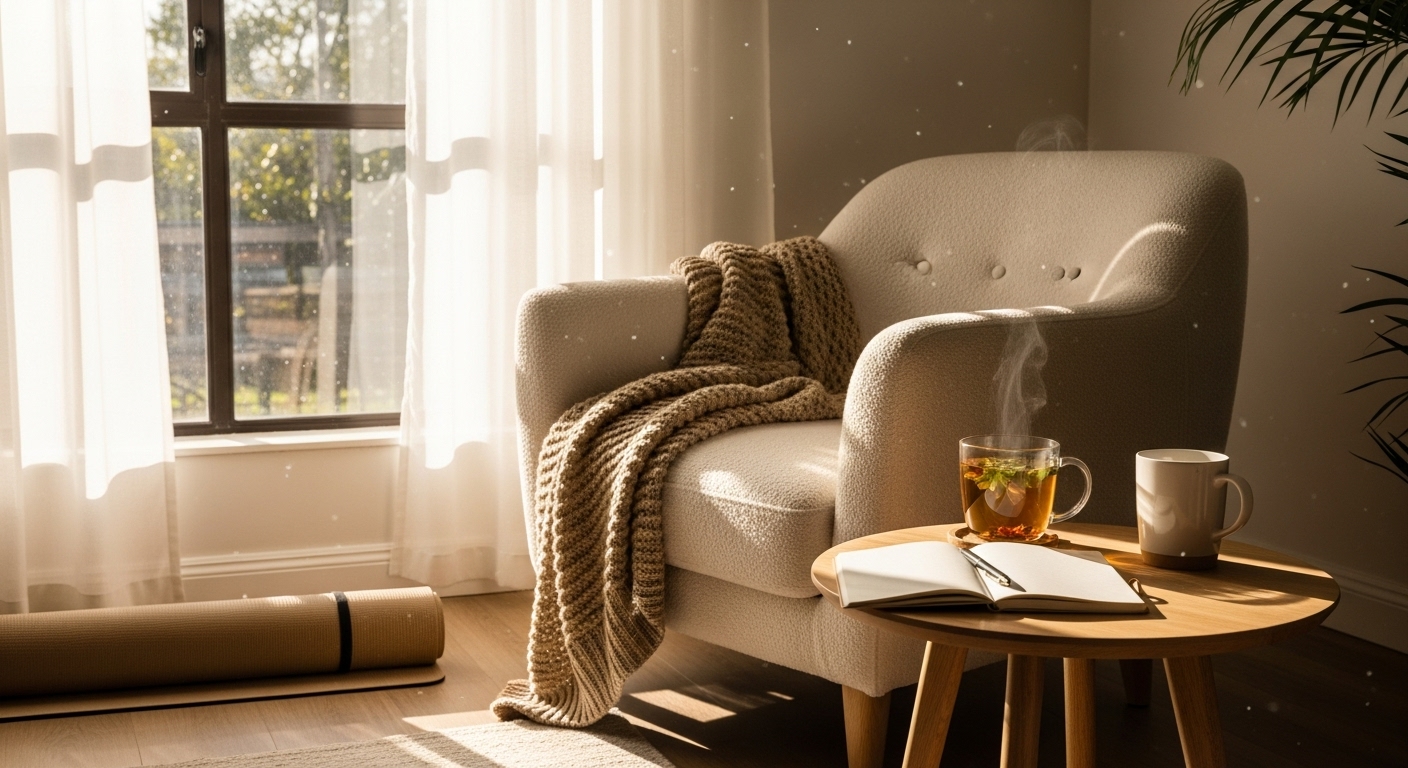
Your nervous system needs cues. Mine’s tea + blanket + 3 pages of a novel at 9 PM. No phones. Brain learns: this means wind-down.
Create yours—bath, jazz, dog cuddles. Consistency compounds. After two weeks, my body relaxes on cue. Pavlov wasn’t wrong.
Step 10: Connect—But the Right Way
Isolation amplifies overwhelm. Text a friend “rough day—send memes.” Or call your mom. Human voices regulate your system.
I joined a local walking group. Zero pressure, just steps and chatter. A 2023 JAMA study showed social connection beats meds for mild anxiety. We’re wired for tribe—use it.
Building Your Calm Toolkit: A Weekly Plan
Ready to practice how to stay calm when life gets overwhelming? Start small:
- Monday: Master 4-7-8 breathing (morning + night).
- Wednesday: Brain dump + one-thing rule.
- Friday: 10-minute movement + worry window.
- Sunday: Set micro-boundaries for the week.
Track in a journal: “What worked? What drained?” Tweak. This isn’t woo-woo; it’s science-backed survival.
When to Seek More Than DIY Calm
Empathy moment: sometimes overwhelm signals deeper stuff—burnout, depression, trauma. If calm tools aren’t cutting it after 2-3 weeks, talk to a pro. Therapy saved me during postpartum chaos. No shame in reinforcements.
Your Calm Revolution Starts Now
Look, life won’t stop throwing curveballs. Deadlines, tantrums, flat tires—they’re coming. But how to stay calm when life gets overwhelming is a skill, not a personality trait. I went from panic-attack regular to “I’ve got this” because I built systems, not superpowers.
Try one tool today. Breathe. Dump. Move. You’re not failing at life—you’re learning to surf it. And trust me, the view from the board is worth it.
What’s your go-to calm hack? Or your biggest overwhelm trigger? Spill below—I read every word.
Frequently Asked Questions (FAQs)
What if breathing exercises make me more anxious?
Start tiny—inhale 3, exhale 3. Focus on a neutral word (“calm”) instead of counts. Some feel lightheaded at first; sit down, go slower. I panicked initially too—shortened to box breathing (4-4-4-4). Works like a charm now.
How do I stay calm with chronic stress like a demanding job?
Micro-dose calm all day: 60-second breath between meetings, walk to the printer, hydrate. Batch tasks to reduce context-switching. I use a “parking lot” note for stray thoughts—frees my brain. Consistency beats intensity.
Can kids learn these calm techniques?
Absolutely—age down. My 5-year-old does “bunny breaths” (quick sniffs in, long blow out). Make it playful: “Smell pizza, blow birthday candles.” A 2024 Child Psychology study showed 5 minutes daily cut tantrums 40%.
What if I don’t have 10 minutes for movement?
Do 2 minutes. Desk push-ups, stair sprints, dance in the kitchen. A 2023 Lancet micro-study found 120 seconds of vigorous movement lowers cortisol 22%. Every second counts—steal them shamelessly.
Is it normal to feel guilty setting boundaries?
Totally. People-pleasing is learned; unlearning feels selfish at first. Reframe: boundaries aren’t walls, they’re bridges to better relationships. I practiced “Let me get back to you” scripts—awkward for a week, liberating forever.
How do I know if overwhelm is burnout?
Burnout’s chronic—exhaustion despite rest, cynicism, detachment. If calm tools help temporarily but you’re still empty, see a doctor or therapist. I ignored signs until I cried over cereal. Early help beats collapse.