
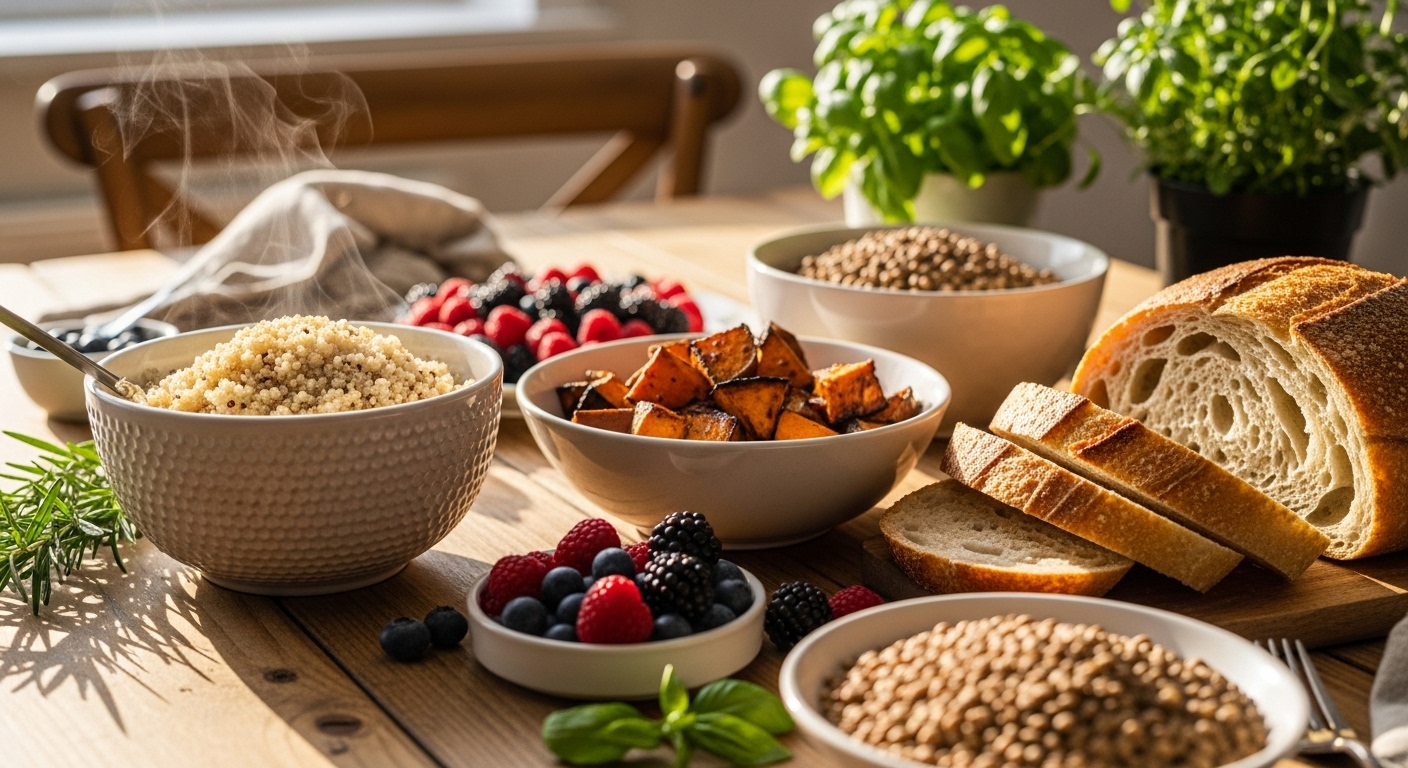
Confession time: I used to treat bread like public enemy number one. One dinner roll? Hello, instant five pounds. I’d eye pasta with suspicion and swap rice for cauliflower like it was some noble sacrifice. Then one day, mid-keto haze, I nearly cried over a plain sweet potato. That’s when I knew something had to give. Turns out, the truth about carbs isn’t what diet culture wants you to believe. Spoiler: they’re not the villain. Your relationship with them might be.
I’ve spent years demonizing, then rehabilitating carbs in my own kitchen. Let’s unpack the science, the myths, and the real-life magic of eating carbs without fear. Ready to make peace with the food group that powers half the planet?
Why We Love to Hate Carbs
Let’s face it—carbs got a bad rap in the early 2000s. Atkins, South Beach, keto: every glossy magazine screamed “banish bread, reveal abs.” And honestly? It worked short-term. I dropped water weight faster than my dignity at a buffet.
But here’s the tricky part: most people don’t realize carbs are your body’s preferred fuel. Your brain alone guzzles 120 grams daily. Cut too low, and you’re foggy, cranky, and raiding the pantry by day three. Sound familiar?
Myth #1: All Carbs Spike Blood Sugar Equally
Not even close. A donut and quinoa both say “carbohydrate,” but your body reads them like Shakespeare versus a text message.
Refined carbs—white bread, sugary cereal—hit your bloodstream like a sugar rush at a kid’s party. Whole carbs—oats, lentils, berries—come wrapped in fiber, slowing absorption. A 2023 Diabetes Care study showed steel-cut oats kept blood sugar steady for four hours; white toast crashed in one.
In my experience, swapping morning bagels for oatmeal with berries killed my 10 AM slump. No more vending machine desperation.
Myth #2: Carbs Make You Gain Weight
Carbs don’t have a secret fat-storing superpower. Calories do. Eat 500 extra from any source—protein, fat, or yes, carbs—and you’ll gain. But 500 calories of broccoli? You’d explode before finishing.
Picture this: two friends eat 2,000 calories daily. One chooses sweet potatoes and brown rice; the other, burgers and fries. The carb-lover often stays leaner because fiber fills you up. Satiety is the real weight-loss hack.
Harvard tracked 120,000 people for 20 years. Those eating more whole grains gained less weight. Carbs didn’t betray them—portion awareness did.
The Glycemic Index Lie You’ve Been Sold
Remember when watermelon was “bad” because of its high GI? Yeah, me too. I skipped summer picnics like a fool.
Truth: glycemic index measures pure carb solutions in a lab, not real meals. Add protein or fat—chicken with rice, anyone?—and the spike flattens. A 2024 Nutrients review called GI “clinically irrelevant” for mixed diets. Eat the watermelon. Life’s too short.
Carbs and Athletic Performance: The Real Story
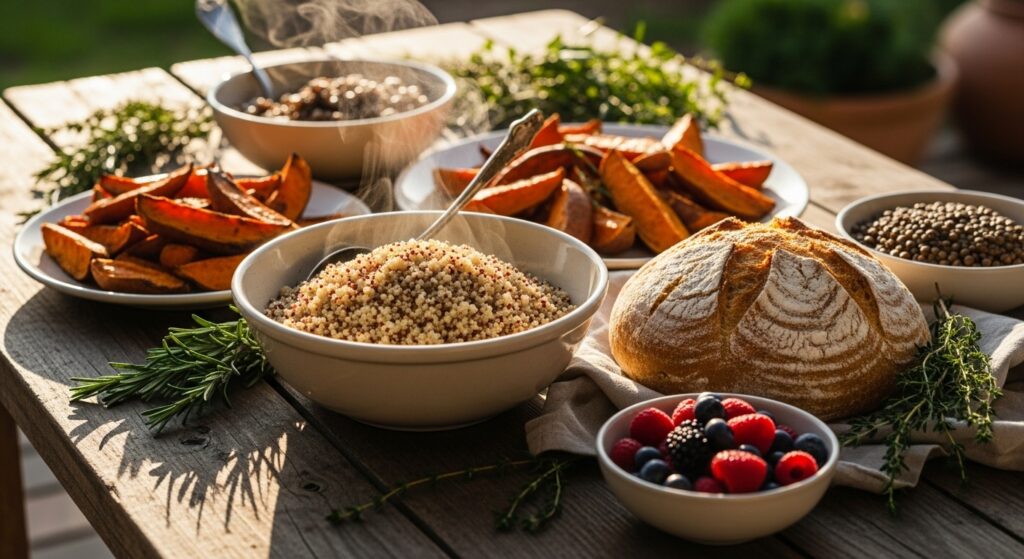
Ever bonk mid-run? That’s your glycogen tank screaming “feed me carbs!” Elite athletes carb-load for a reason—pasta parties aren’t just Italian tradition.
I started adding rice to post-workout meals. Recovery sped up; soreness dropped. A Journal of Sports Sciences meta-analysis confirmed: 7–12 grams of carbs per kg body weight optimizes performance. For a 150-lb person? That’s 475–815 grams daily. Enemy? Hardly.
The Low-Carb Flu Is Real (And Avoidable)
Most people don’t realize the first week of keto isn’t fat-burning—it’s your body panicking. Electrolytes tank, energy crashes, mood swings. I called it “keto rage.”
Refeeding carbs strategically prevents this. Cyclical keto or carb cycling lets you enjoy benefits without the misery. I do higher carbs on lifting days, lower on rest. Best of both worlds.
Fiber: The Unsung Hero of Carbohydrates
Here’s where carbs shine. Fiber feeds your gut microbiome, lowers cholesterol, and keeps you regular. Aim for 25–35 grams daily—most Americans scrape 15.
My morning ritual: overnight oats with chia, flax, and berries. Hits 12 grams before coffee. No bloating, steady energy. A 2023 Gut journal study linked high-fiber diets to 30% lower heart disease risk. Carbs saving lives? You bet.
Simple vs. Complex: A Quick Cheat Sheet
Confused in the grocery aisle? Use this:
- Simple (limit): Soda, candy, white bread, pastries.
- Complex (love): Quinoa, sweet potatoes, legumes, whole fruits, barley.
Pro tip: if it grows from the ground or has a mother, it’s probably a winner. Processed “low-carb” bars? Often sugar alcohols and regret.
Carbs at Night: Friend or Foe?
“No carbs after 6 PM!” screamed every ‘90s infomercial. Science yawns.
An Israeli study had participants eat most carbs at dinner. They lost more fat and felt fuller than morning-carb eaters. Tryptophan in carbs even improves sleep. I eat rice with salmon at 8 PM—sleep like a baby, wake refreshed.
How Many Carbs Do You Actually Need?
Forget one-size-fits-all. Sedentary? 40–50% of calories. Active? 55–65%. Use this formula:
Grams = (Total calories × carb %) ÷ 4
Example: 2,000 calories, 50% carbs = 250 grams. That’s 4–5 cups cooked rice or oats daily. Not scary when spread out.
I track loosely with MyFitnessPal. Adjust based on energy, not dogma.
Building a Carb-Smart Plate
Want the truth about carbs in action? Try the plate method:
- ¼ plate: complex carbs (brown rice, quinoa)
- ¼ plate: lean protein (chicken, tofu)
- ½ plate: veggies (the more color, the better)
- Thumb-sized fat (avocado, olive oil)
Add fruit for dessert. Balanced, satisfying, sustainable. My family devours these—no complaints, no hunger.
Real-Life Carb Wins from My Kitchen
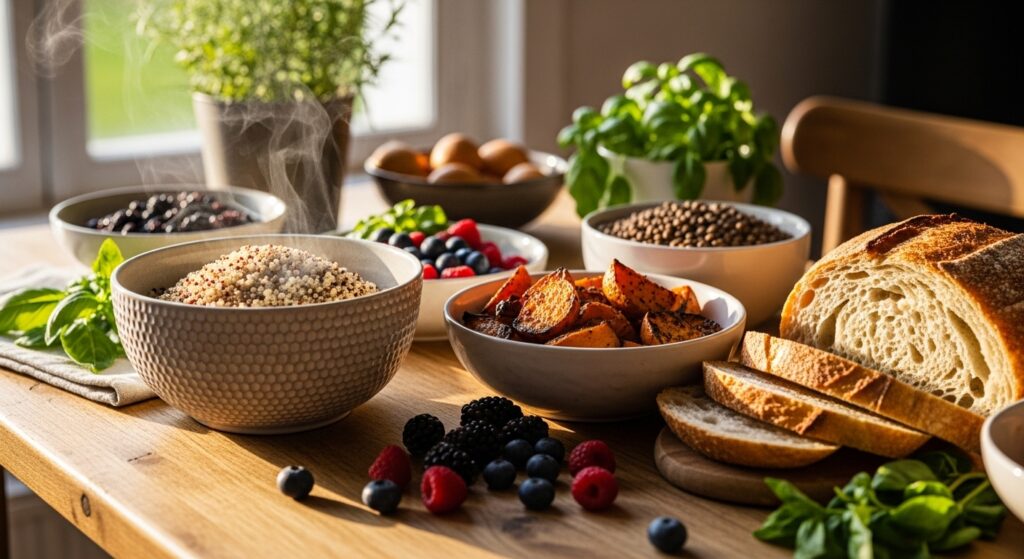
Curious what this looks like daily? Here’s a snapshot:
Breakfast: Greek yogurt, berries, granola (40g carbs).
Lunch: Turkey wrap with whole-grain tortilla, hummus, veggies (50g).
Snack: Apple + peanut butter (30g).
Dinner: Stir-fry with rice, shrimp, broccoli (60g).
Total: ~180g. Energy steady, cravings gone. Scale? Friendly. That’s the truth about carbs in practice.
When Carbs Are Actually the Enemy
Fairness check: for some, carbs hurt. Insulin resistance, PCOS, or diabetes may require lower intake. Work with a doctor or dietitian—don’t self-diagnose via TikTok.
Even then, zero-carb isn’t mandatory. Strategic inclusion often controls blood sugar better than elimination. Knowledge beats fear.
Your Carb Comeback Action Plan
Ready to reclaim carbs without regret?
- Day 1: Add one complex carb to each meal.
- Day 3: Experiment with nighttime carbs—track sleep.
- Week 2: Hit 25g fiber daily (oats, beans, veggies).
- Ongoing: Listen to hunger, not headlines.
Celebrate non-scale wins: better workouts, happier gut, sustained energy. That’s the real prize.
Final Verdict: Carbs Aren’t the Enemy—Misinformation Is
Look, I get it. We’ve been conditioned to fear the food that literally fuels civilization. But the truth about carbs is liberating: they’re tools, not terrorists. Choose whole sources, pair smartly, honor your body’s cues.
I eat bread now. Real sourdough, warm from the oven. And guess what? I’m healthier, happier, and finally free. You can be too.
What’s your carb confession? Love ‘em? Fear ‘em? Drop it below—let’s chat.
Frequently Asked Questions (FAQs)
Will eating carbs at night really make me gain weight?
No evidence supports this. A 2024 study in Obesity had participants eat starch-heavy dinners—they lost more fat than breakfast-focused groups. Timing matters less than total calories and sleep quality. Enjoy your rice bowl guilt-free.
How many carbs should I eat to lose weight?
Depends on activity. Sedentary? 100–150g daily. Moderately active? 150–250g. Focus on deficit (500 below maintenance) with whole sources. I lost 12 lbs eating 180g daily—fiber kept me full, workouts fueled.
Are potatoes actually healthy or just “starchy?”
Potatoes are nutrition powerhouses—potassium, vitamin C, fiber (especially with skin). A medium baked potato has 4g fiber, 37g carbs. Pair with protein; skip the butter pool. I roast them with rosemary—crispy, satisfying, zero guilt.
What’s the deal with “net carbs” on keto labels?
Net carbs = total carbs minus fiber/sugar alcohols. Useful for keto, misleading otherwise. Fiber counts toward health goals. A “3g net carb” bar might have 20g total—your gut needs the fiber. Read full labels.
Can I eat carbs if I have insulin resistance?
Yes, strategically. Pair with protein/fat (chicken + sweet potato), choose low-GI options (lentils over rice), time around workouts. A 2023 Diabetes journal study showed resistance-trained meals improved insulin sensitivity 30%. Work with a pro.
Why do I crash after eating carbs?
Likely refined carbs solo—white bread, sugary coffee. Add protein/fat/fiber: turkey sandwich on whole grain, oatmeal with nuts. My crash cure: apple + cheese. Steady energy, no 2 PM nap attack.