
You know the feeling. It’s 3 PM. Your brain has turned to fog, your eyelids feel heavy, and the only thing you can focus on is the siren song of the office vending machine. You reach for a candy bar or a sugary coffee, get a 20-minute buzz, and then crash even harder. It’s a brutal cycle, and one I was stuck in for years.
I used to think my afternoon slump was just an inevitable part of being an adult. But then I started digging into the science, and I had a revelation: our energy levels aren’t a mystery. They’re a direct result of the fuel we put in our tanks. The secret to all-day energy isn’t about willpower; it’s about biochemistry.
When you understand how different foods interact with your blood sugar, your mitochondria (your cellular power plants!), and your brain chemistry, the path to sustained vitality becomes crystal clear. This isn’t about trendy hacks or expensive supplements. It’s about building your plate with purpose. Let’s explore what to eat for all-day energy, with a little help from the science that makes it all work.
The #1 Energy Killer: The Blood Sugar Roller Coaster
If you only take one thing from this article, let it be this: stable energy comes from stable blood sugar. Think of your blood sugar like the fuel gauge in your car. You want it in the middle, cruising steadily.
When you eat a sugary muffin or a bowl of white pasta, you’re pouring rocket fuel into the tank. Your blood sugar spikes way up. Your pancreas panics and releases a flood of insulin to bring it down. But it often overcorrects, sending your blood sugar crashing down. That crash? That’s the 3 PM slump, the brain fog, the irritability. It’s a physiological event, not a character flaw.
The goal, then, is to choose foods that provide a slow, steady release of glucose into your bloodstream. This is the absolute foundation of knowing what to eat for all-day energy.
The All-Star Energy Foods (And Why They Work)
So, which foods keep you on that steady cruise control? They all have one thing in common: they are whole, minimally processed, and work in harmony with your body.
1. Complex Carbohydrates: The Slow-Burn Fuel
Carbs are not the enemy! Your brain runs primarily on glucose. The key is to choose the right kind.
- Oats & Quinoa: These are packed with fiber, which slows down digestion and prevents a sugar spike. A bowl of oatmeal for breakfast is a classic for a reason—it provides a slow, steady release of energy for hours.
- Sweet Potatoes & Whole Grains: Rich in complex carbs and fiber, they’re like time-release energy capsules. The science shows that their low glycemic index directly correlates with improved cognitive performance and sustained physical energy.
2. Lean Proteins: The Sustaining Anchor
Protein is crucial for what to eat for all-day energy because it slows the absorption of carbohydrates and promotes satiety, preventing energy dips caused by hunger.
- Eggs, Chicken, Lentils, Greek Yogurt: These proteins provide a steady stream of amino acids. One study published in the International Journal of Obesity found that a high-protein breakfast was significantly more effective than a high-carb one at reducing cravings and preventing overeating later, which directly stabilizes energy.
3. Healthy Fats: The Long-Lasting Logs on the Fire
While carbs are the kindling, healthy fats are the long-burning logs. They are a concentrated source of energy and are essential for absorbing fat-soluble vitamins.
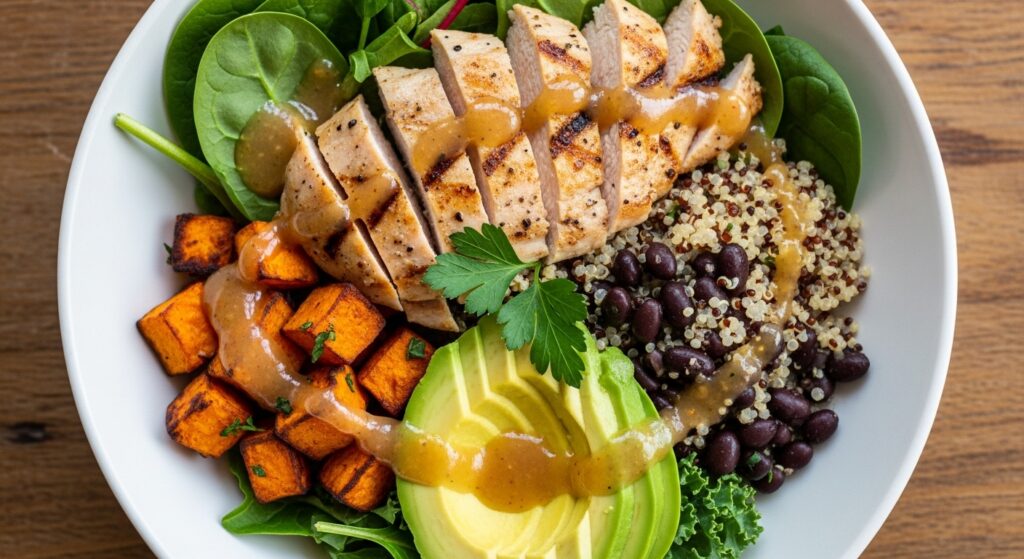
- Avocado, Nuts, Seeds, Olive Oil: The monounsaturated and polyunsaturated fats in these foods support cell membrane health, including the membranes of your mitochondria. Healthy mitochondria mean efficient energy production. It’s that simple.
Building Your All-Day Energy Plate
Knowing the components is one thing; putting them together is another. Here’s a simple formula to use for every meal to ensure you’re eating for all-day energy:
The Perfect Plate Formula:
- ½ Plate Non-Starchy Vegetables: (Spinach, broccoli, peppers, etc.) For fiber, vitamins, and antioxidants that reduce cellular stress.
- ¼ Plate Lean Protein: (Chicken, fish, tofu, lentils) To sustain you and slow digestion.
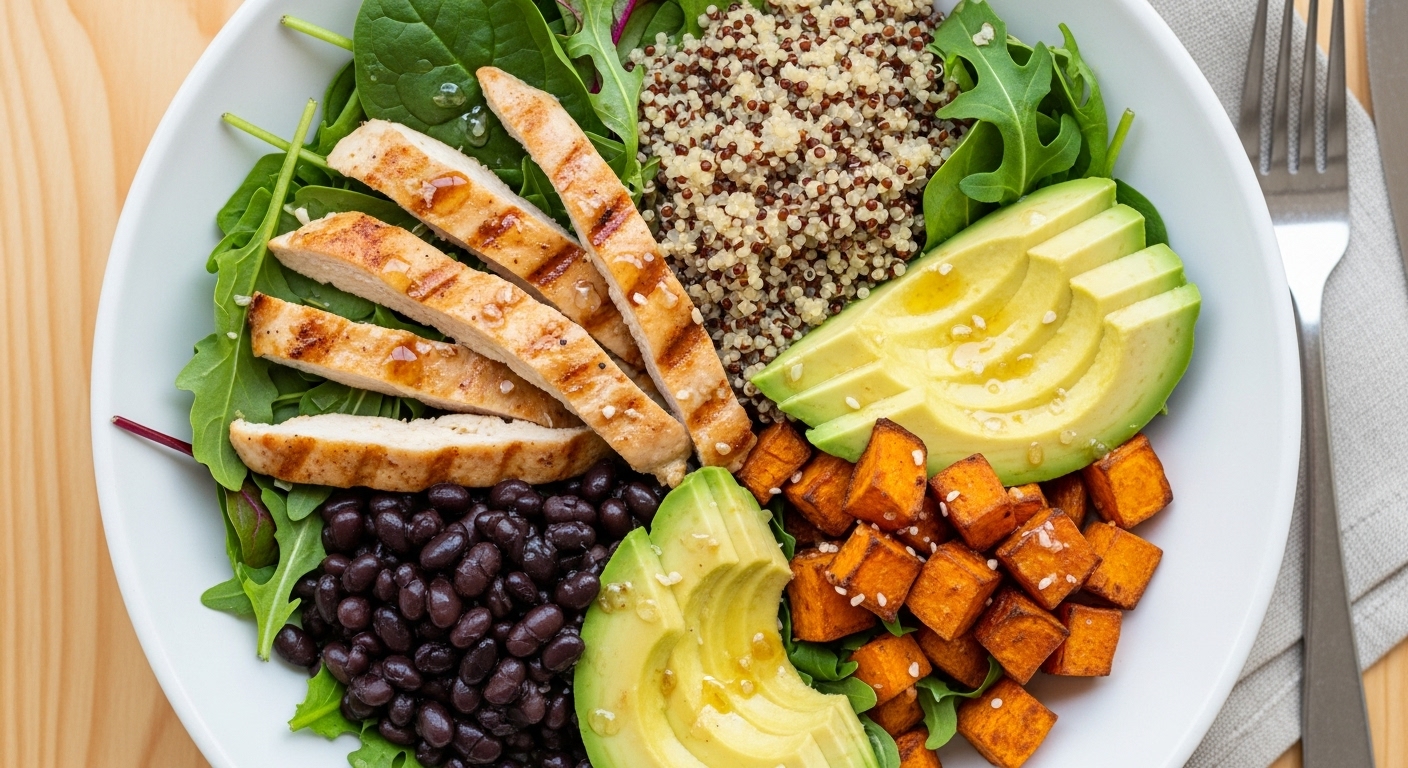
- ¼ Plate Complex Carbohydrate: (Quinoa, brown rice, sweet potato) For that steady glucose release.
- Add a Thumb-sized Serving of Healthy Fat: (Avocado, sprinkle of nuts, drizzle of olive oil) For long-lasting fuel and satisfaction.
A Sample Day of Energizing Meals
Let’s make this practical. Here’s what a day of eating for all-day energy could look like:
Breakfast: Veggie scramble (2 eggs + spinach + mushrooms) with a side of ½ an avocado and a small apple. (The combo of protein, fat, and fiber-rich carbs prevents a morning crash.)
Lunch: A large salad with grilled chicken, quinoa, chickpeas, lots of colorful veggies, and a olive oil-based vinaigrette. (This keeps you full and focused through the afternoon without the post-lunch coma.)
Snack: Plain Greek yogurt with a handful of berries and a tablespoon of chia seeds. (A perfect mix of protein, fiber, and antioxidants to bridge the gap to dinner.)
Dinner: Baked salmon (rich in omega-3s for brain health) with roasted broccoli and a small sweet potato.
The Hydration and Timing Factor
We can’t talk about what to eat for all-day energy without mentioning two critical co-factors: water and meal timing.
Hydration: Even mild dehydration can cause a significant drop in energy levels and cognitive function. Water is essential for every metabolic process, including energy production. Keep a water bottle on your desk and sip all day.
Timing: Don’t skip breakfast. Breaking your overnight fast with a balanced meal kickstarts your metabolism. Also, try not to go more than 4-5 hours without eating. Letting yourself get ravenously hungry is a surefire way to make poor, energy-zapping food choices.
Your Body is Waiting to Feel Alive
Feeling tired all the time isn’t your default state. It’s a signal. By shifting your focus from quick fixes to strategic nourishment, you can fundamentally change how you feel from morning to night. It’s not about a restrictive diet; it’s about choosing the foods that choose you back, giving you the steady, vibrant energy you need to live your life fully.
Start with one meal tomorrow. Build a breakfast with protein, fiber, and healthy fat. Notice how you feel at 10 AM. That single, positive shift is the first step on the road to ditching the slumps for good.
Frequently Asked Questions (FAQs)
Are there any specific fruits that are best for energy?
Berries (like blueberries and raspberries) and apples are excellent choices. They have a lower glycemic index due to their high fiber content, which means they release sugar slowly. Bananas are great too, especially around workouts, as they provide quick energy and potassium, but pair them with a handful of nuts to balance the sugar release.
I’ve heard about “adrenal fatigue.” Do certain foods help with that?
While “adrenal fatigue” isn’t a recognized medical diagnosis, chronic stress does exhaust the body. The best dietary approach is the one outlined here: stable blood sugar. Stress already spikes cortisol; adding blood sugar swings doubles the burden on your system. Consistent, balanced meals are the most powerful tool to support your body under stress.
What’s the best quick snack for an energy boost without the crash?
My go-to is an apple with a tablespoon of almond butter, or a hard-boiled egg with a few whole-grain crackers. These combinations provide a mix of fiber, protein, and healthy fat to give you a gentle lift that lasts, unlike a purely sugary snack.
How does caffeine fit into an energy-focused diet?
Caffeine is a stimulant, not a source of energy. It can be useful in moderation, but relying on it masks true fatigue. The key is to not use it to replace sleep or food. Avoid sugary coffee drinks, and try to have your coffee with or after a meal to blunt its potential impact on blood sugar.
Can a vitamin deficiency cause low energy?
Absolutely. Common culprits include Iron (especially for women), Vitamin B12 (crucial for energy production), and Vitamin D. If you’re consistently fatigued despite eating well, it’s worth talking to your doctor and getting your levels checked. Food is powerful, but it’s not a substitute for medical advice.