
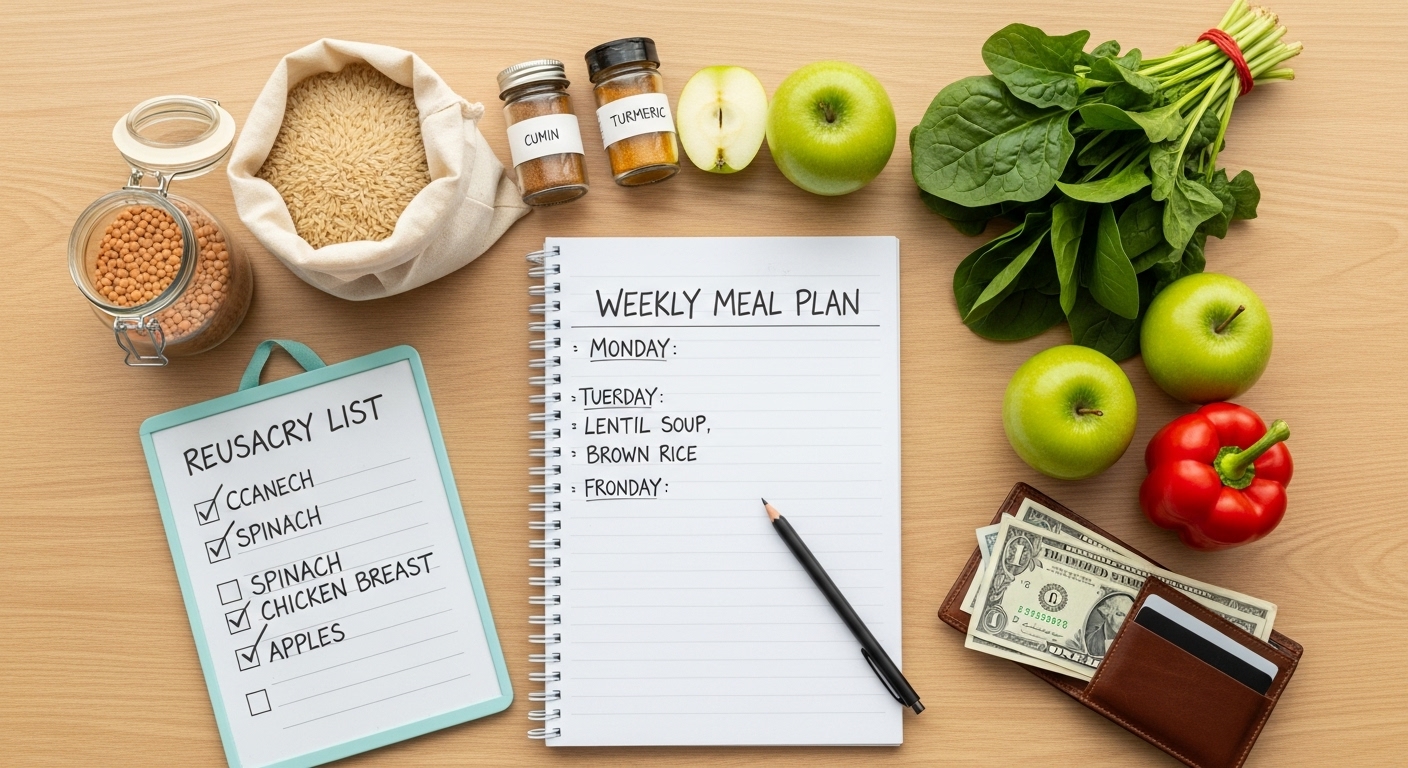
Let me guess. You’ve tried this before, haven’t you? You sit down with the best intentions, a notepad, and a head full of Pinterest recipes. You make a beautiful, colour-coded meal plan. Then you get to the store, see the total at the checkout, and your heart sinks. By Wednesday, life has gotten in the way, the plan is out the window, and you’re back to ordering takeout, feeling both broke and defeated.
I’ve been there more times than I care to admit. The problem wasn’t my willpower; it was my system. I was trying to force a perfect, rigid plan onto a messy, unpredictable life. A truly effective weekly budget diet isn’t about restriction and complexity. It’s about creating a smart, flexible system that works for you, not against you.
This is the difference between a diet that drains your wallet and your will, and a weekly budget diet that actually works. It’s the difference between feeling stressed about food and feeling empowered by it. Let’s walk through the steps to build a plan that is sustainable, nutritious, and kind to your bank account.
The Mindset Shift: From Rigid Plan to Flexible Framework
Before we talk numbers or grocery lists, we need to talk about your headspace. The biggest mistake people make is treating their meal plan like a strict contract. Life happens. Kids get sick. You have to work late. A friend invites you over.
A successful weekly budget diet is a framework, not a straightjacket. It’s a guide that tells you, “Here’s what we *could* eat this week, and here are the ingredients we have to make it happen.” This shift from rigid to flexible is the single most important key to making this work long-term.
Step 1: The 30-Minute Weekly “Food Summit”
This is your command center. Pick one time each week—Sunday afternoon works for most—and make it non-negotiable. This is where you’ll build your framework for the week.
1. Inventory Your Kitchen (The “Shop Your Kitchen First” Rule): Before you even think about the store, open your pantry, fridge, and freezer. What’s hiding in there? That half-bag of rice? Those canned tomatoes? That lonely sweet potato? Write it all down. The goal of a weekly budget diet is to use what you have, not just accumulate more stuff.
2. Check the Sales Flyer: Take five minutes to look at your local grocery store’s digital flyer. What proteins are on sale? What vegetables are at their lowest price? Let the sales dictate your core ingredients. If chicken thighs are $1.99 a pound, that’s your protein for the week. If cabbage is 50 cents a pound, you’ve found your vegetable star.
3. Build Your Meal Framework: Now, build a loose plan. I use a simple formula:
- 2-3 Core Proteins: (e.g., a whole chicken to roast, a pound of ground turkey, a bag of lentils).
- 3-4 Core Carbs: (e.g., a big batch of brown rice, a bag of potatoes, a box of whole-wheat pasta).
- 4-5 Core Vegetables: (e.g., onions, carrots, celery, plus 1-2 sale veggies like broccoli or zucchini).
Mix and match these components throughout the week. This is far easier than planning seven distinct, elaborate dinners.
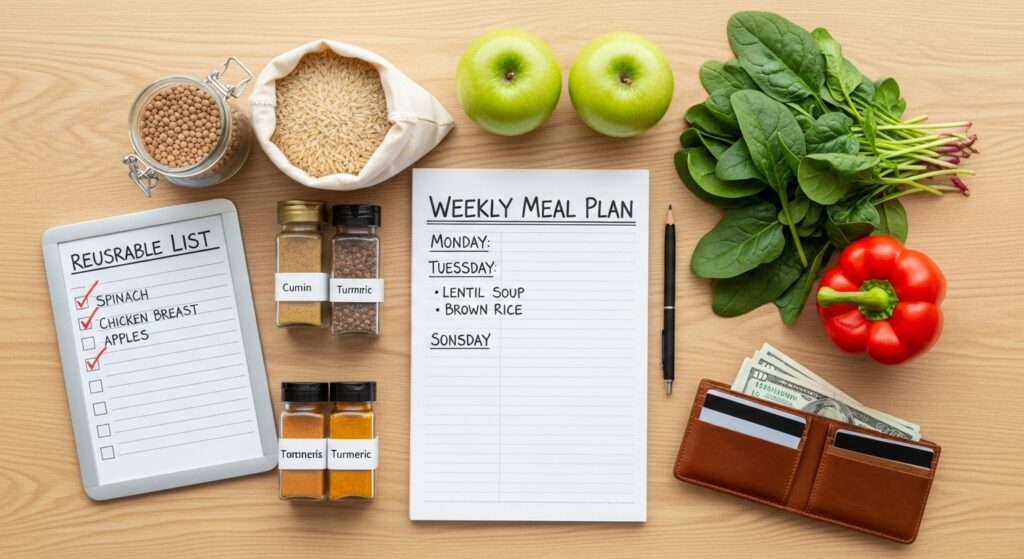
Step 2: Master the Art of the Strategic Grocery List
Your list is your weapon against impulse buys. But it needs to be strategic.
The “Puzzle Piece” List: Every item on your list should serve multiple purposes. That block of cheese can go in omelets, on top of chili, and in a pasta bake. A tub of plain yogurt can be breakfast, a baked potato topper, or a base for a creamy salad dressing. This approach minimizes waste and maximizes your budget, which is the entire point of a weekly budget diet.
Avoid the “Recipe Trap”: Resist the urge to buy a one-off ingredient for a single fancy recipe. That jar of specialty spice that costs $8 and you’ll use once? It’s a budget killer. Stick to versatile staples and a core set of spices you use regularly.
Step 3: The Sunday Batch-Cook Session (Your Secret Weapon)
This is the step that makes everything else fall into place. A 1-2 hour investment on Sunday saves you hours of stress during the week.
You don’t have to cook everything, just the components. Here’s what I always prep:
- A Grain: A big pot of quinoa or brown rice.
- A Protein: A roasted chicken or a batch of seasoned ground turkey or lentils.
- Chopped Veggies: Wash and chop onions, carrots, celery, and any other hardy vegetables. This makes weeknight cooking infinitely faster.
- A “Freebie”: Something that makes you happy, like a batch of hard-boiled eggs for snacks or a simple vinaigrette.
Now, during the week, “cooking” is just assembling these pre-cooked components in different ways.
Step 4: Embrace “Theme Nights” for Effortless Decisions
Decision fatigue is real. By 6 PM, the last thing you want to do is figure out what’s for dinner. Theme nights eliminate that mental load.
Your themes can be as simple as:
- Meatless Monday: Lentil soup, black bean tacos, chickpea curry.
- Bowl Tuesday: Grain + protein + roasted veggies + a tasty sauce.
- Stir-Fry Wednesday: Use up any remaining veggies with a quick stir-fry over rice.
- Leftover Thursday: A mandatory clean-out-the-fridge night. This reduces waste to almost zero.
Themes give you structure without the rigidity. You know what *type* of meal to make, but you have the freedom to use whatever ingredients you have on hand.
Making It Stick: The Realistic Approach
Here’s the final, most important part. Your weekly budget diet must have a built-in contingency plan.
Designate one meal a week as your “flex” meal. Maybe it’s Friday night pizza or Saturday lunch out. By planning for this, you remove the guilt and the sense of “failure” when life happens. This isn’t cheating; it’s part of the plan. A sustainable weekly budget diet makes room for real life, because that’s the only kind of diet that actually works in the long run.
This isn’t about perfection. It’s about progress. It’s about taking control, saving money, and nourishing your body without the constant stress. Start with one step. Hold your first “Food Summit” this week. You might just find that a little planning brings a whole lot of peace.
Frequently Asked Questions (FAQs)
How much money can I realistically save with a weekly budget diet?
It varies, but most people are shocked by the savings. By eliminating daily takeout, reducing food waste, and shopping strategically, families often cut their grocery bill by 25-40%. A single person might go from spending $80 on disjointed meals to a planned $50 shop, saving over $100 a month. The real saving is in the consistent, small decisions.
I have a picky family. How can I make this work for everyone?
Focus on “deconstructed” meals. Instead of a casserole, serve the components separately: a protein, a grain, and two or three vegetable options. This lets everyone build their own plate. Also, involve them in the planning! Let each family member choose one meal for the week, ensuring everyone has something to look forward to.
What if I don’t have time for a big Sunday meal prep?
No problem! The goal is preparation, not necessarily full-on cooking. Even 20 minutes to wash and chop veggies, or to cook a big batch of rice, is a huge win. “Mini-preps” throughout the week (like cooking a double portion of grains on Tuesday) can be just as effective as one big session.
How do I avoid getting bored eating the same foods?
The magic is in the sauces and seasonings! The same batch of chicken and rice can be Mexican (with salsa and cumin), Asian (with soy sauce and ginger), or Italian (with tomatoes and herbs) depending on the spices and a simple sauce you whip up. A well-stocked spice rack is cheaper and more versatile than buying new main ingredients every week.
Is it cheaper to buy fresh, frozen, or canned vegetables?
It depends on the vegetable and the season, but frozen is often the most consistent budget winner. They’re frozen at peak freshness, won’t go bad, and are pre-chopped, saving you time. Canned beans and tomatoes are also fantastic, budget-friendly staples. Buy fresh for what’s in season and on sale, and rely on frozen for your everyday needs.