
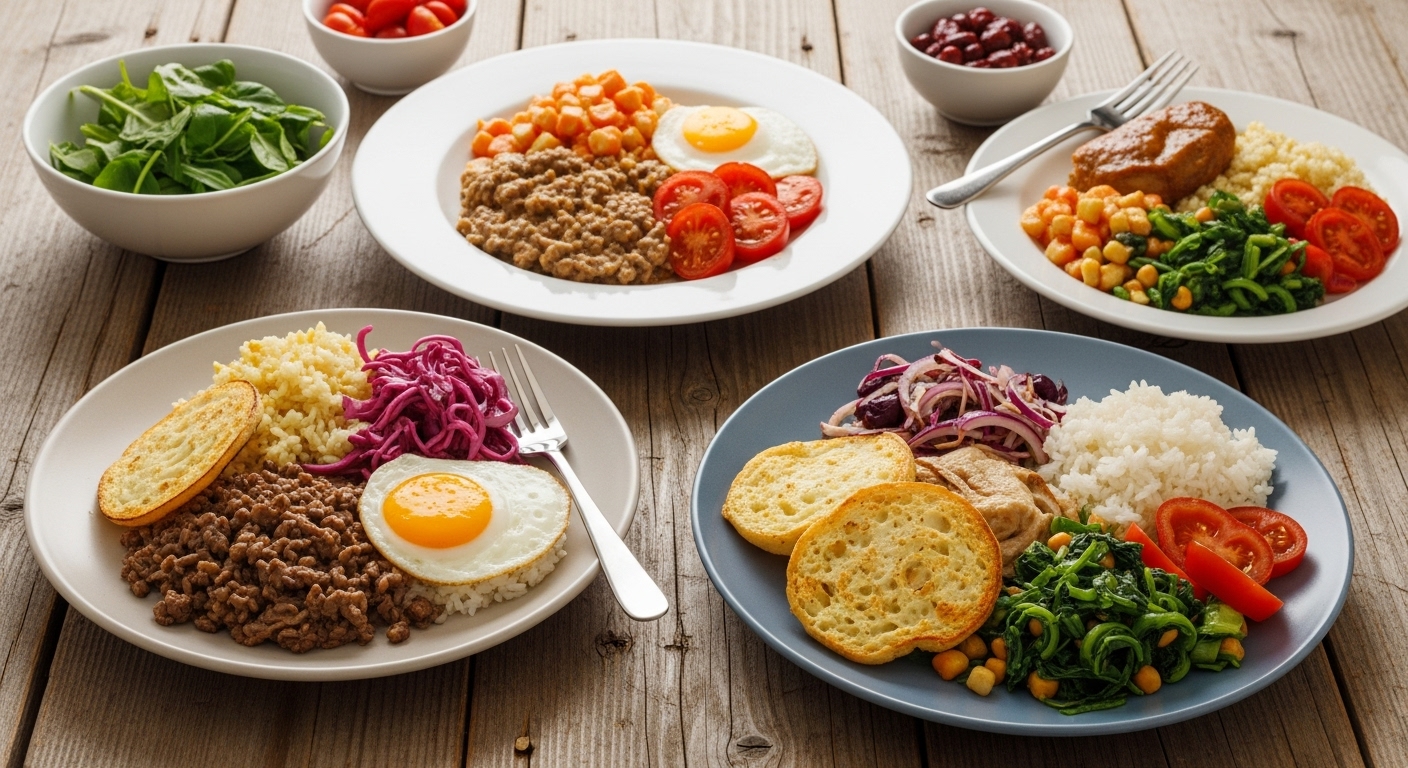
Let’s talk about one of the biggest myths in healthy eating: that it’s expensive. I can’t tell you how many times I’ve heard someone say, “I’d love to eat better, but I just can’t afford it.” And honestly? I get it. When you’re staring down a tight grocery budget, a seven-dollar bag of kale chips or a ten-dollar super food smoothie feels laughably out of reach.
But here’s the secret I learned during my own broke post-college years, and later while feeding a family on a shoestring budget: truly healthy eating isn’t about those fancy, packaged products. It’s about getting back to the basics. It’s about the humble, unassuming ingredients that have nourished generations without costing a fortune.
When you shift your focus from expensive “health foods” to simple, whole ingredients, a whole new world opens up. I’m not just talking about surviving. I’m talking about crafting genuinely delicious, nutrient-dense, and satisfying healthy meal ideas for under $2 a day. It’s not only possible; it can be a creative and deeply rewarding challenge. Let me show you how.
The Golden Rule: Build Your Pantry Foundation
Before we get to the specific meals, you need a solid foundation. The key to pulling off these healthy meal ideas for under $2 a day is investing in a few core, inexpensive staples. Think of this as your nutritional safety net.
- Dry Legumes & Grains: Lentils, black beans, chickpeas, brown rice, and oats are your new best friends. Bought in bulk, they cost pennies per serving and are packed with protein, fiber, and complex carbs.
- Frozen Vegetables: Don’t sleep on the frozen aisle! Frozen spinach, peas, corn, and mixed veggies are frozen at peak freshness, are just as nutritious as fresh, and won’t go bad in your fridge. They’re a lifesaver.
- Aromatics & Spices: A bag of onions, a head of garlic, and a few key spices (like cumin, paprika, and chili powder) are what transform cheap ingredients into delicious meals. They’re the flavor engine of your kitchen.
A Full Day of Eating for Under $2: A Sample Plan
Let’s make this real. Here’s a full day of eating built entirely around our budget-friendly principles. I’ve even done some rough, conservative math based on average U.S. prices to show you it’s possible.
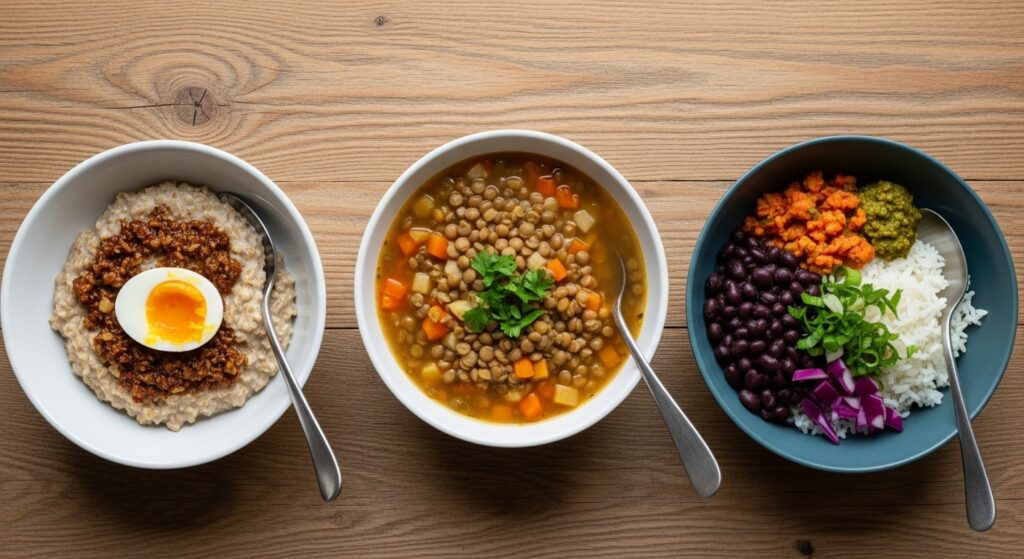
Breakfast: Savory Oatmeal with an Egg (~$0.45)
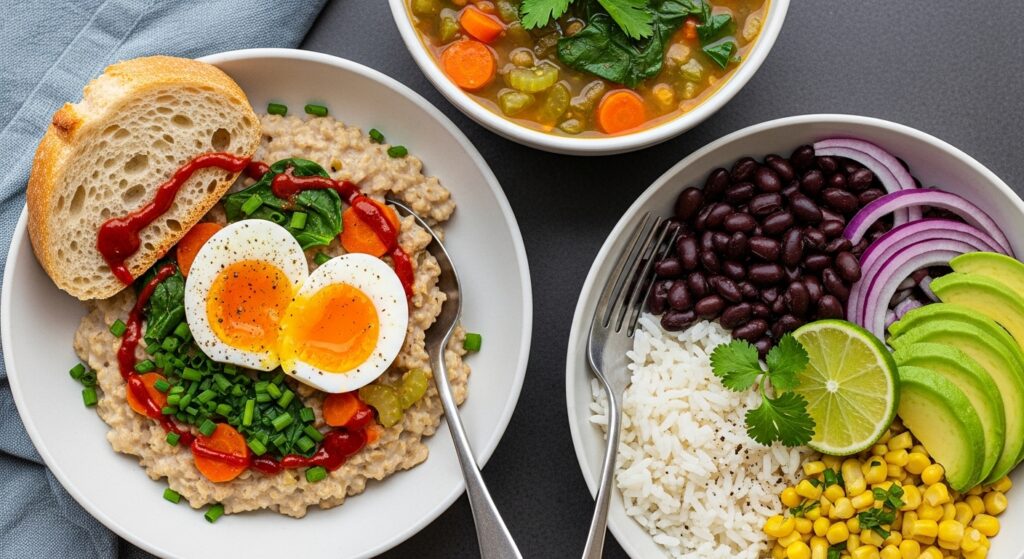
Forget sweet oatmeal for a moment. Cook your rolled oats in water or a low-sodium broth. While that’s simmering, soft-boil or fry an egg. Top the oatmeal with the egg, a sprinkle of black pepper, and maybe a dash of hot sauce if you have it. The oats provide slow-burning energy and fiber, while the egg adds high-quality protein and healthy fats to keep you full all morning. It’s a game-changer.
Lunch: Hearty Lentil & Vegetable Soup (~$0.70)
This is where a big batch cook pays off. Sauté a chopped onion and a couple of cloves of garlic. Add a cup of dry brown lentils, a few cups of water or broth, and a handful of frozen mixed vegetables (carrots, corn, green beans). Season with salt, pepper, and a bay leaf if you have one. Let it simmer until the lentils are tender. This makes several generous servings, bringing the cost per bowl way down. It’s hearty, deeply satisfying, and packed with plant-based protein.
[Insert Image 2 Here]
Dinner: Black Bean & Rice Bowls with Salsa (~$0.85)
This is a classic for a reason. Cook a batch of brown rice. Heat up a can of black beans (rinsed and drained). For the “salsa,” simply chop a fresh tomato and a bit of onion if you have one, or use a spoonful of jarred salsa. Combine everything in a bowl. The combination of rice and beans creates a complete protein, meaning it provides all the essential amino acids your body needs. It’s simple, filling, and incredibly cheap.
More Winning Combinations to Try
Once you have the basics down, you can mix and match. Here are a few more of my favorite healthy meal ideas for under $2 a day.
- Chickpea “Tuna” Salad Sandwich: Mash a can of chickpeas with a tablespoon of mayo or plain yogurt, a spoonful of mustard, and some chopped onion and celery. Serve on whole-wheat bread. (Cost: ~$0.90)
- Potato & Cabbage Hash: Dice a potato and sauté it with a generous amount of shredded cabbage and onion until tender and slightly crispy. Season generously. A fried egg on top makes it a meal. (Cost: ~$0.65)
- Red Lentil Dal with Rice: Cook red lentils with turmeric, cumin, and garlic until they form a thick, porridge-like consistency. Serve over a heap of steaming rice. It’s the ultimate comfort food. (Cost: ~$0.60)
The Mindset Shift: Your Key to Success
Pulling this off requires a slight change in perspective. It’s not about deprivation; it’s about resourcefulness and creativity.
Embrace Batch Cooking: The real savings happen when you cook in large quantities. Making a giant pot of lentil soup or a big tray of roasted chickpeas and vegetables on a Sunday sets you up for success all week.
Reduce Food Waste like a Pro: This is non-negotiable. Save vegetable scraps (onion skins, carrot tops) in a freezer bag to make your own vegetable broth. Use wilting vegetables in soups. See every scrap as potential food, not trash.
Shop Seasonally and Sales: If cabbage is 39 cents a pound this week, that’s your vegetable. If sweet potatoes are on sale, buy a bag. Let the store’s weekly flyer guide your meal planning.
Honestly, the most rewarding part of this journey isn’t just the money you save. It’s the empowerment that comes from knowing you can nourish your body beautifully, no matter what your bank account says. These healthy meal ideas for under $2 a day are more than just recipes; they’re a testament to the fact that good health is, and always has been, accessible to everyone.
Frequently Asked Questions (FAQs)
Is it really possible to get enough protein on this budget?
Absolutely. The protein powerhouses of a tight budget are eggs, lentils, chickpeas, black beans, and other legumes. A single can of beans or a couple of eggs provides a significant amount of protein for just a few cents. Combining rice and beans also creates a complete protein, ensuring you get all the essential amino acids you need.
Won’t I get bored eating the same cheap foods?
Variety comes from spices and preparation, not necessarily expensive ingredients. The same can of chickpeas can be mashed for a sandwich, roasted with spices for a snack, or blended into a creamy soup. By playing with different global spice profiles (like Italian herbs, Mexican chili powder, or Indian curry), you can create wildly different meals from the same base ingredients.
How can I add more fresh fruits and vegetables?
Focus on the most affordable fresh produce, which is often seasonal and local. Cabbage, carrots, onions, bananas, and apples are typically low-cost year-round. Also, never underestimate the power of frozen fruits (for smoothies) and frozen vegetables (for soups and sides); they are just as nutritious and often more budget-friendly.
What’s the first step I should take to start eating like this?
Start with one meal. Next time you go shopping, buy a bag of brown lentils or a carton of oats. Master one or two of the simple recipes, like the lentil soup or savory oatmeal. Once you see how easy, delicious, and cheap one meal can be, you’ll feel motivated to build out the rest of your week.
Are canned vegetables as healthy as fresh for these meals?
For the purposes of soups, stews, and cooked dishes, canned vegetables are a fantastic and affordable option. Just be sure to choose low-sodium or no-salt-added versions when possible, and give them a good rinse under cold water to remove any excess sodium. They provide essential vitamins and fiber at a fraction of the cost.