
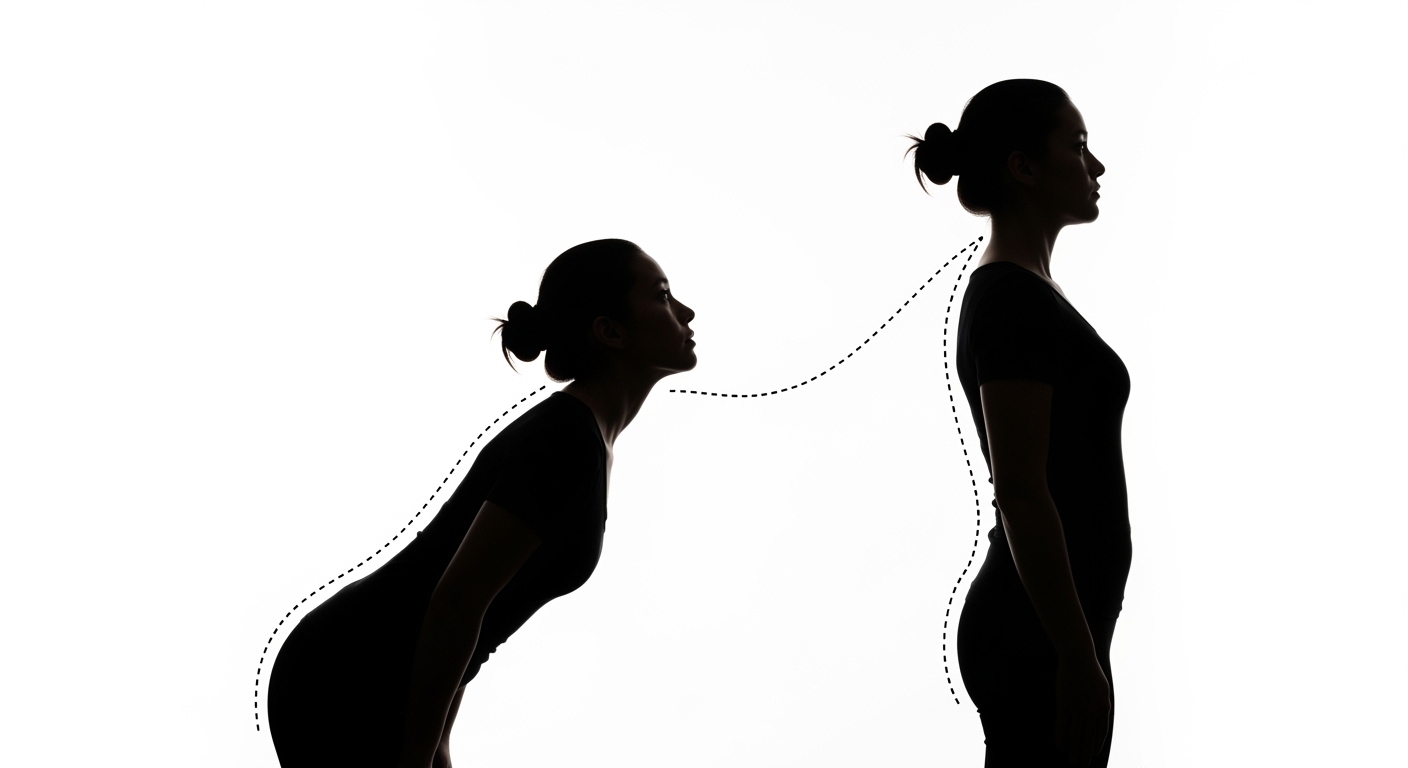
Okay, let’s do a quick posture check. Right now, as you’re reading this, are your shoulders somewhere up around your ears? Is your head jutting forward like a turtle peeking out of its shell? Is there a gentle, familiar ache blooming between your shoulder blades? If any of this sounds familiar, welcome to the club. Modern life has turned us into a society of slouchers.
I used to think my chronically sore back was just my cross to bear. My desk job had me folded over a keyboard for hours, and my phone had me looking down in a permanent state of submission. I felt perpetually crumpled. Then I realized something that changed everything: posture isn’t a fixed state. It’s a habit. And just like any bad habit, it can be broken and replaced with a good one.
That’s what this 30-day journey is all about. This isn’t about forcing yourself to “sit up straight” through sheer willpower. That’s exhausting and never lasts. This is a natural, step-by-step process of retraining your body and building the strength and awareness to hold yourself with ease. Let’s explore how to fix your posture naturally, not with rigid braces, but with mindful movement and simple daily habits.
Why “Just Sit Up Straight” is Terrible Advice
We’ve all been told to “stand up straight” since we were kids. But here’s the problem: that command usually makes us throw our shoulders back, puff our chest out, and arch our lower back in an exaggerated, military-style pose. It looks and feels stiff because it is stiff. It’s not sustainable.
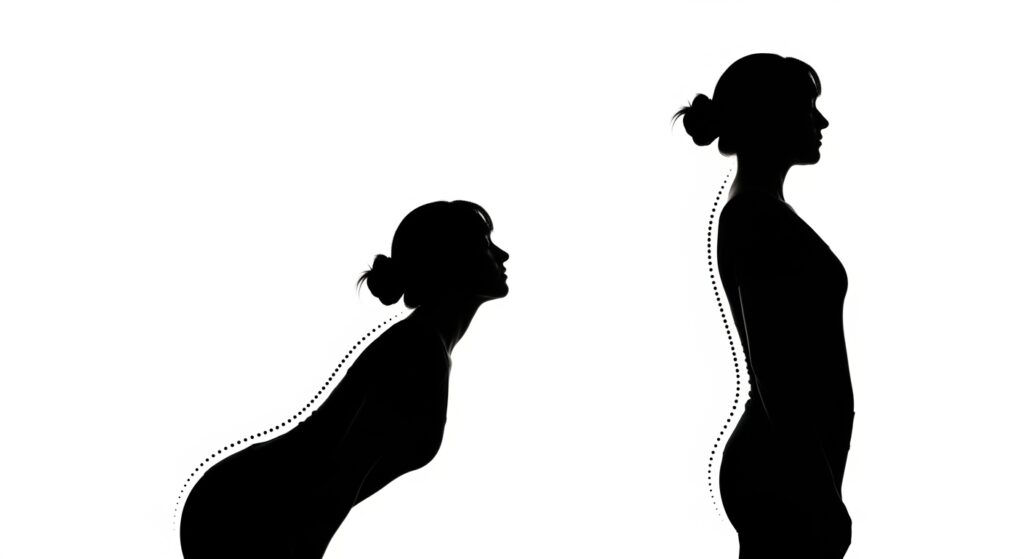
Good posture isn’t about bracing or tightening. If you ask me, it’s about ease. It’s the state where your skeleton is stacked efficiently, and your muscles can relax because they’re not working overtime to hold you up against gravity. When you learn how to fix your posture naturally, you’re aiming for this state of balanced alignment, not a rigid mannequin pose.
The 30-Day Natural Posture Reset Plan
This plan is built on three pillars: Awareness, Strength, and Integration. We’ll focus on one pillar each week, building a solid foundation for lasting change.
Week 1: The Awareness Awakening
You can’t fix what you’re not aware of. This first week is all about tuning in.
- The “Posture Check” Habit: Set a random alarm on your phone 3-4 times a day. When it goes off, don’t just adjust your posture. Take a mental scan. Where are your shoulders? Is your head forward? How does your lower back feel? This isn’t about judgment, just observation.
- Master the Chin Tuck: This is your #1 tool for combating “tech neck.” Sit or stand tall. Gently glide your head straight back, creating a double chin. Don’t tilt your head down. Hold for 3 seconds, release. Do this 10 times, several times a day.
- Optimize Your Workspace: Raise your laptop screen so the top is at or slightly below eye level. This single change prevents you from constantly looking down.
Week 2: Building Your Posture Foundation
Now that you’re more aware, it’s time to build the strength that makes good posture effortless.
- Wall Angels (Daily, 1 minute): Stand with your back against a wall, heels a few inches away. Your glutes, upper back, and head should touch the wall. Slowly slide your arms up and down the wall in a “snow angel” motion, trying to keep your lower back from arching.
- Glute Bridges (Daily, 15 reps): Your glutes are the foundation of your posture. Lie on your back, knees bent. Squeeze your glutes to lift your hips, creating a straight line from knees to shoulders.
- Cat-Cow Stretch (Daily, 10 rounds): On all fours, alternate between arching your back (Cow) and rounding it (Cat). This mobilizes your entire spine.
Week 3: Integrating Movement
Posture isn’t just how you sit; it’s how you move. This week, we bring awareness into motion.
- The Walk Test: Next time you’re walking, notice your gait. Are you looking at the ground? Are your shoulders slumped? Try this: imagine a string pulling the crown of your head up to the sky. Let your shoulders relax down and back. Feel the difference?
- Standing Desk (or Improvised) Breaks: If you sit all day, set a timer to stand up for 5 minutes every hour. Use this time to do a few chin tucks and shoulder rolls.
- Stretch Your Chest: Find a doorway. Place your forearms on the frame, elbows slightly below shoulder height, and gently step through. You should feel a fantastic stretch across your chest—the muscles that get tight from hunching.
Week 4: Making it Second Nature
This is where it all comes together. The goal is to make your new, aligned posture your default setting.
- Reduce the Alarms: You’ve built more body awareness. See if you can catch yourself slouching without the alarm. The internal cue is replacing the external one.
- Create “Posture Triggers”: Link a posture check to a daily activity. For example: “Every time I check my email, I will do one chin tuck.” Or, “When I’m waiting for the microwave, I will stand against the wall.”
- Celebrate the Wins: Notice the small things. Maybe your neck doesn’t hurt as much at the end of the day. Perhaps you feel taller. Acknowledge this progress! It means your plan for how to fix your posture naturally is working.
The Mind-Body Connection: It’s Not Just Physical
Here’s the tricky part that most people don’t realize. Your posture is deeply linked to your mental state. When you’re stressed, anxious, or tired, you literally carry that weight on your shoulders, causing you to slump. It’s a vicious cycle: poor posture can even make you feel more insecure and less energetic.
By consciously improving your posture, you’re not just helping your body. You’re sending a signal to your brain that you are confident and capable. It’s a two-way street. Taking a few deep breaths while you sit tall can reset both your physical and mental state in under a minute.

Your Upright Future Awaits
Learning how to fix your posture naturally is one of the most empowering things you can do for your long-term health and well-being. It’s not a quick fix, but a gradual rewiring. There will be days you forget, days you slump, and that’s perfectly okay. The goal is progress, not perfection.
In just 30 days, you can fundamentally change your relationship with your body. You’ll move with more grace, breathe more deeply, and carry yourself with a new sense of ease. So take that first step today. Do a chin tuck. Set that alarm. Your future, pain-free, upright self is already thanking you.
Frequently Asked Questions (FAQs)
I’ve had bad posture for years. Can I really fix it in 30 days?
Absolutely. While 30 days may not completely erase decades of habit, it is more than enough time to build significant awareness, break the worst of your slouching patterns, and establish a strong foundation of strength. You will see and feel a dramatic difference. The key is consistency with the daily exercises and habits.
Will these methods help with lower back pain from sitting?
Yes, they absolutely can. Much of lower back pain is related to weak glutes and a tight lower back. The glute bridges and cat-cow stretches specifically target this imbalance. Combined with the overall alignment improvements, this plan is a powerful, natural approach to alleviating sitting-related discomfort.
Are posture corrector devices a good substitute for this?
In my experience, they’re a crutch, not a cure. A brace might pull your shoulders back, but it doesn’t teach your muscles to do the work themselves. This plan focuses on building your intrinsic strength and body awareness, which is the only way to create lasting change. A device can’t do that for you.
How long should I hold the stretches each day?
For dynamic stretches like the Cat-Cow, move with your breath for about 10 repetitions. For static stretches like the doorway chest stretch, hold for 20-30 seconds, and repeat 2-3 times. The daily strength exercises (like wall angels and glute bridges) should be done for the recommended reps, focusing on quality of movement over speed.
What’s the single most important exercise in this plan?
If I had to pick one, it would be the Wall Angel. It’s a triple threat: it builds awareness of your spinal position, strengthens the critical postural muscles in your upper back, and stretches the tight chest muscles—all at once. It’s a cornerstone for anyone learning how to fix their posture naturally.