
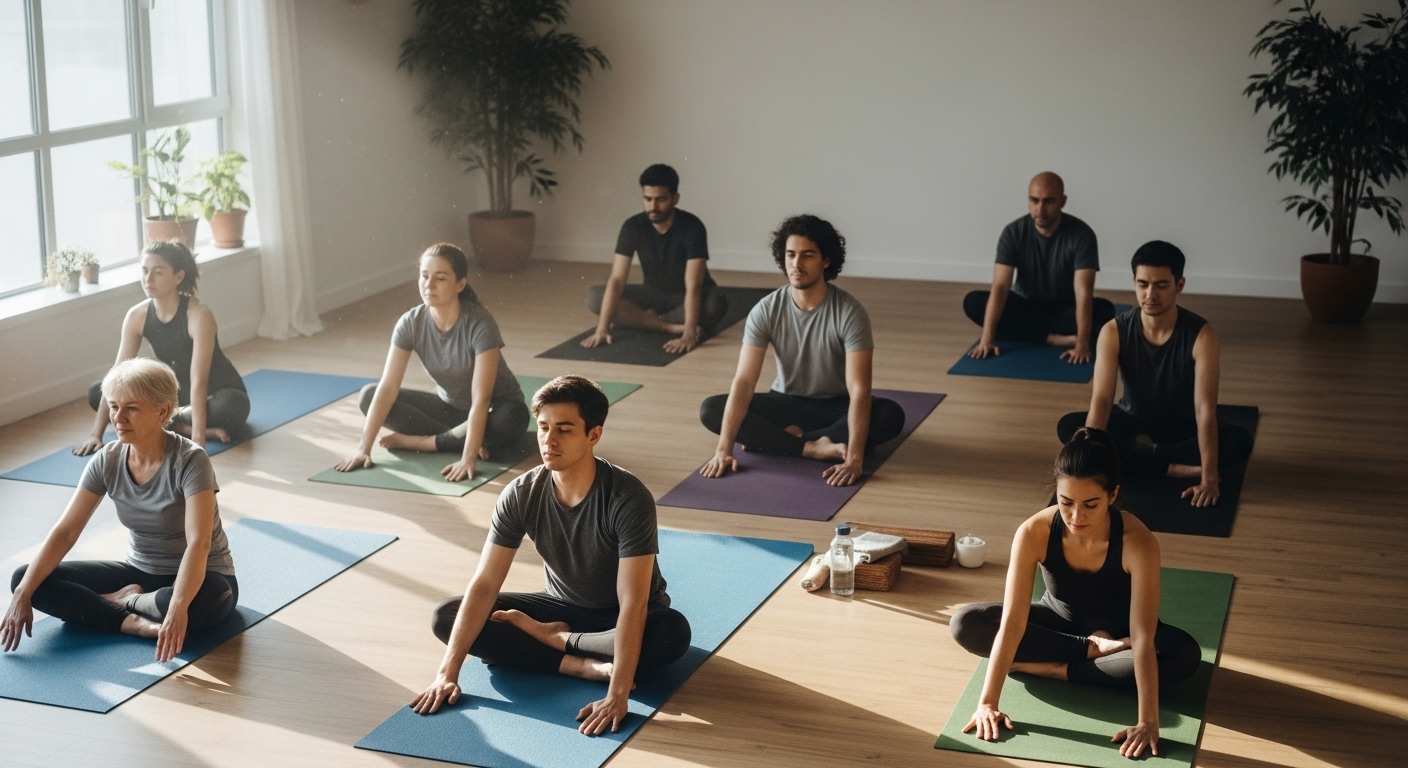
Let’s be honest for a second. Your first yoga class can feel… overwhelming. You unroll your shiny new mat, glance around at the seemingly boneless humans beside you, and try to remember how to breathe. It’s supposed to be calming, but internally, your monologue is a frantic mix of “Why is my leg there?” and “Is everyone watching me wobble?”
I’ve been there. I remember my first downward-facing dog felt less like a graceful canine stretch and more like a rickety tent about to collapse. The truth is, everyone makes mistakes when they start. It’s a natural, totally okay part of the process. But knowing the most common yoga mistakes beginners make can fast-track you from feeling like a fish out of water to flowing with confidence.
This isn’t about achieving some Instagram-worthy perfect pose. It’s about building a sustainable, joyful practice that makes you feel amazing, not injured. So, take a deep breath. Let’s untangle those beginner blunders together and set you up for a lifetime of loving your practice.
1. The “No Pain, No Gain” Mentality
This might be the biggest and most dangerous misconception in all of fitness, and it’s especially misplaced in yoga. Yoga is not a punishment for your body; it’s a conversation with it. If you’re feeling sharp, stabbing, or shooting pain, that’s your body’s fire alarm going off. You don’t ignore a fire alarm—you listen to it!
So many beginners, fueled by determination (or maybe a little ego), push through intense sensation because they think they’re supposed to. Here’s the tricky part: you’re supposed to feel sensation—a deep stretch, muscular engagement, maybe even a mild discomfort as you open tight areas. But pain? That’s a hard no.
How to Fix It:
- Learn the Difference: Sensation is a dull, spreading feeling, often described as a “good stretch.” Pain is acute, sharp, and localized. If you feel the latter, back off immediately.
- Use Your Breath as a Guide: If you can’t breathe deeply and calmly in a pose, you’ve gone too far. Your breath is your most honest teacher.
- Embrace Modifications: Bend your knees in a forward fold. Use a block in triangle pose. A modification isn’t a failure; it’s an intelligent adjustment that honors your body today.
2. Forgetting to Breathe (Seriously!)
You’d think breathing would be the easy part, right? It’s automatic! But the moment you’re trying to balance on one foot while twisting your torso into a pretzel, it’s often the first thing to go. I’ve seen countless beginners, myself included, hold their breath or take shallow, panicked sips of air.
This is a massive missed opportunity. In yoga, the breath (or pranayama) is the engine of the entire practice. It’s what links the mind and body. It oxygenates your muscles, calms your nervous system, and allows you to move deeper into poses with control.
How to Fix It:
- Make Noise with Ujjayi Breath: Often called “ocean breath,” this involves gently constricting the back of your throat as you breathe in and out through your nose. It sounds like Darth Vader, and it gives you an audible anchor for your breath, making it harder to forget.
- Sync Movement with Breath: In a vinyasa flow, you inhale to lift your arms, and exhale to fold forward. Let the teacher’s cues guide you. This rhythmic connection is the heart of a fluid practice.
- Pause and Reset: If you find yourself breathless, simply come back to a comfortable seat or child’s pose, close your eyes, and take five deep, conscious breaths. No one will judge you; they’ll probably be jealous.
3. Comparing Your Journey to Others
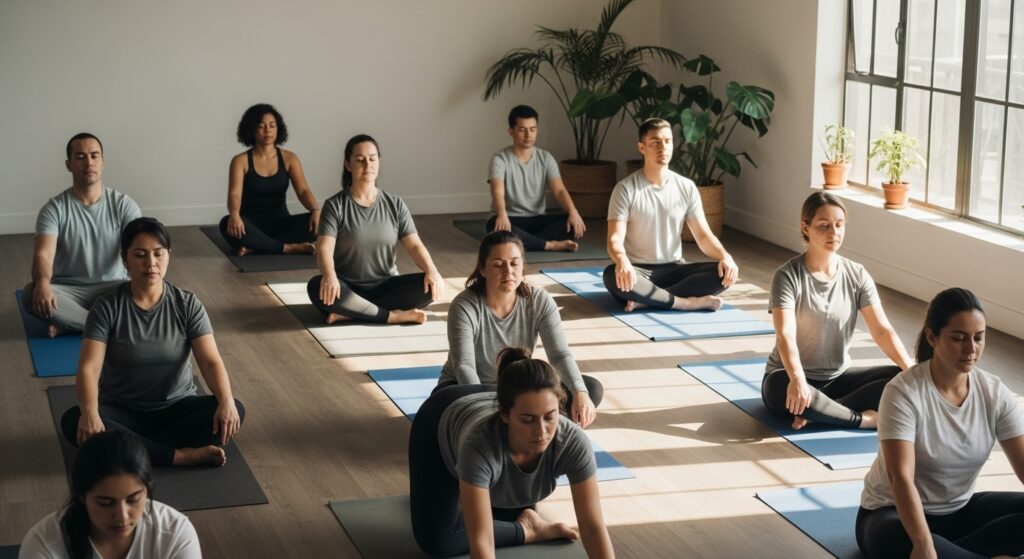
Ah, the comparison trap. It’s the thief of joy, and it runs rampant in yoga studios. You look to the left and see someone binding themselves in a pose you can’t even pronounce. You look to the right and see a serene-faced yogi who hasn’t broken a sweat.
Here’s a little secret I learned from a teacher years ago: The most advanced person in the room isn’t the one in the fanciest pose. It’s the one who is most aware of their own breath and body, completely immersed in their own experience.
How to Fix It:
- Create a “Drishti”: In yoga, a drishti is a focused gaze. Soften your eyes and focus on a point on the floor in front of you, or simply close them. When your gaze is inward, you can’t see what anyone else is doing.
- Remember Their Day One: That flexible person in the front row had a first day, too. They’ve just been practicing longer. Your journey is unique to your body, your history, and your life.
- Celebrate Your Mini-Victories: Maybe today you reached your toes without bending your knees, or you held a balance for one second longer. That’s progress! Acknowledge it and feel good about it.
4. Skipping the Foundation: Alignment Over Aesthetics
Social media is flooded with pictures of extreme backbends and complex arm balances. It’s easy to think that’s the goal. But trying to force your body into a shape without the proper foundation is like building a house on sand—it’s going to crumble, and you might get hurt.
Proper alignment isn’t about looking perfect. It’s about creating stable, efficient, and safe positions for your joints and muscles. For example, in a high lunge, ensuring your front knee is stacked over your ankle protects your knee joint. It’s a small detail with huge implications.
How to Fix It:
- Listen to the Cues: Teachers constantly offer alignment cues. “Spin your inner thighs back,” “Hug your muscles to the bone,” “Lengthen your tailbone.” Listen to these more than you watch the demonstration.
- Ask for Help: If you’re confused, ask the teacher before or after class. A good teacher will be thrilled you asked and can offer a hands-on adjustment or a clearer explanation.
- Focus on Feeling, Not Form: Instead of wondering if your pose looks like the teacher’s, ask yourself how it feels. Do you feel strong? Stable? A stretch in the right place? That internal feedback is your real guide.
5. Neglecting the “Boring” Parts: Savasana and Warm-Ups
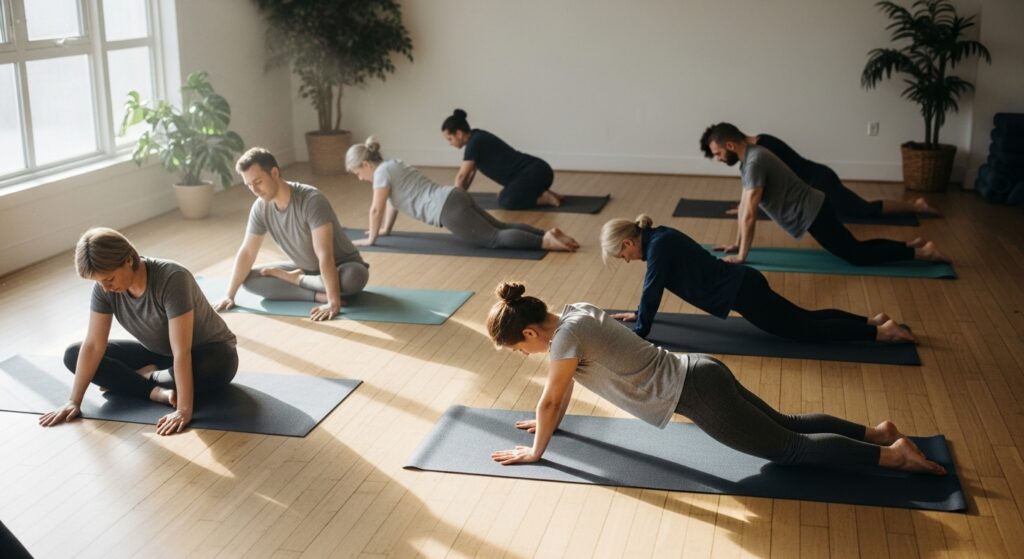
I get it. You’re busy. Sneaking out of class during the final relaxation (Savasana) to beat traffic can be tempting. Or, maybe you skip the gentle warm-up poses because you’re ready to “get to the real work.”
If you ask me, this is like baking a cake and pulling it out of the oven before it’s set. You’re missing the crucial part that brings it all together. Savasana is where your nervous system integrates the physical work you’ve done. It’s not napping; it’s active relaxation. Similarly, skipping a warm-up is a fast track to straining a cold muscle.
How to Fix It:
- Honor Your Entire Practice Time: Schedule your class so you can stay for the entire session, from the first Om to the final bow. Savasana is a non-negotiable part of your practice.
- Reframe Savasana: Think of it as the most challenging pose of the class. The goal is to be completely still, awake, and aware, allowing the body and mind to absorb the benefits of your effort.
- Embrace the Warm-Up: Those gentle cat-cows and slow sun salutations are priming your body for deeper work. They increase blood flow and mobility, making the rest of your practice safer and more effective.
Your Mat, Your Practice
Remember, yoga is a personal journey, not a performance. Making these common yoga mistakes is a rite of passage for every single person who has ever stepped on a mat. The goal isn’t to avoid them entirely, but to become aware of them, learn from them, and gently guide yourself back to a practice that feels both supportive and empowering.
Be patient with yourself. Laugh when you fall over. Celebrate the small openings. Show up with curiosity instead of expectation. That’s the real magic of yoga—it meets you exactly where you are.
Frequently Asked Questions (FAQs)
I’m not flexible at all. Can I still do yoga?
Absolutely! This is the most common reason people hesitate, and it’s the very best reason to start. Yoga isn’t about being flexible; it’s about becoming flexible, both in body and mind. A good teacher will offer plenty of modifications, and you’ll be amazed at how quickly your range of motion improves with consistent practice.
How often should a beginner practice yoga?
For beginners, consistency is far more important than duration or intensity. Starting with 2-3 sessions per week is a fantastic goal. This gives your body time to adapt and learn the new movements while building a sustainable habit. Even a 15-minute home practice on off-days can make a huge difference.
What do I need to start my first yoga class?
You don’t need much! Just wear comfortable, breathable clothing that allows you to move freely. Most studios rent mats, but if you plan to stick with it, your own mat is a great investment. Bring a water bottle and, most importantly, an open mind and a sense of curiosity. Leave the competition and judgment at the door.
I have a wrist/shoulder/knee injury. Can I practice yoga safely?
Yes, but with caution. Always inform your instructor about your injury before class begins. They can provide specific modifications and alternative poses to keep you safe. It’s also wise to get clearance from your doctor or physical therapist. Look for classes labeled “Gentle,” “Restorative,” or “Therapeutic,” and avoid vigorous styles like Power Yoga or Ashtanga until you’ve healed.
What’s the difference between all the different styles of yoga (Hatha, Vinyasa, etc.)?
Great question! Hatha is a general term for physical yoga and is often a slower-paced class great for beginners, focusing on holding poses. Vinyasa is more dynamic, linking breath with movement in a continuous “flow.” Yin involves holding passive floor poses for several minutes to target connective tissues. Hot Yoga is practice in a heated room. For beginners, Hatha or a “Slow Flow” Vinyasa is an excellent place to start.